
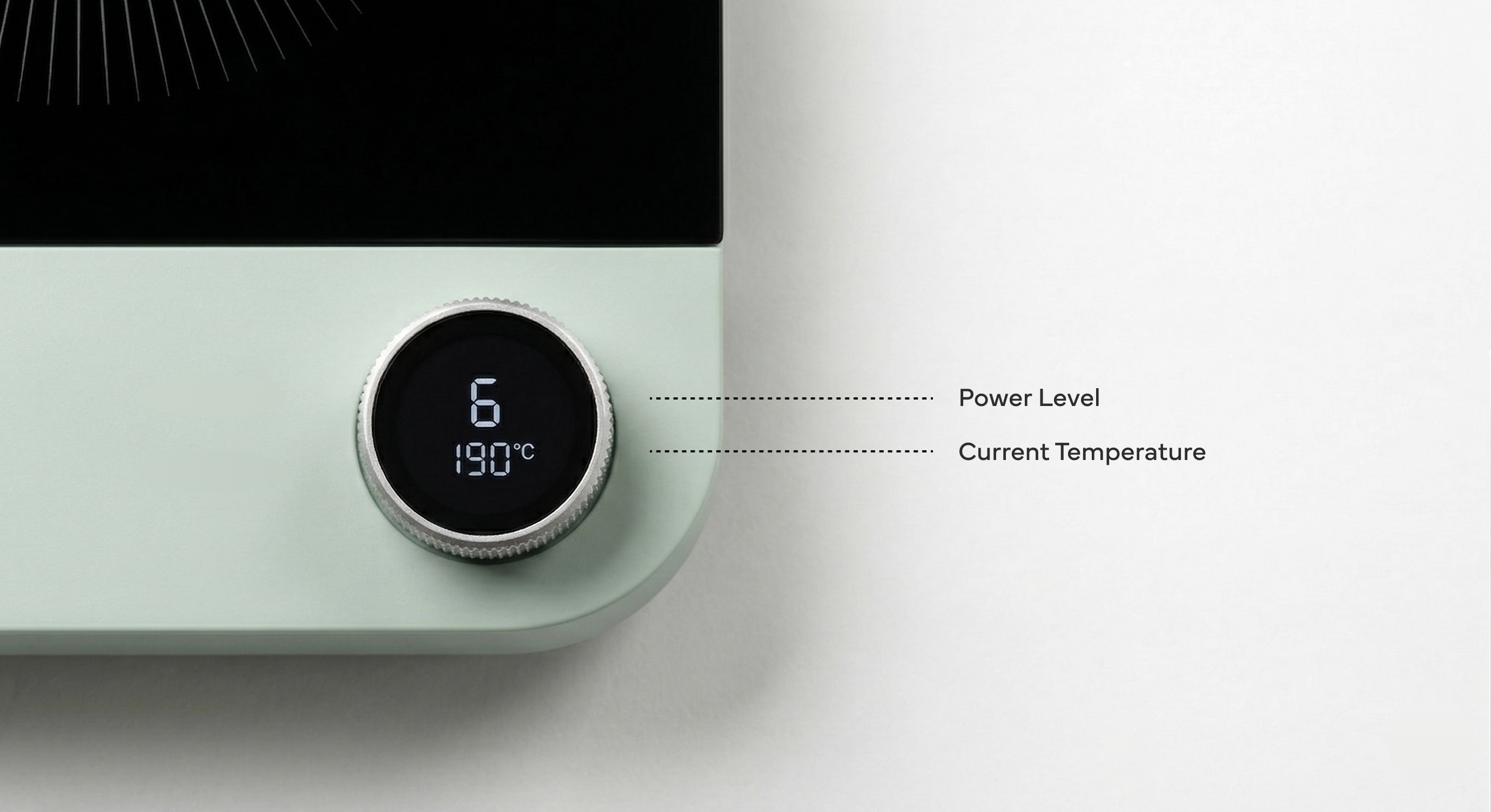
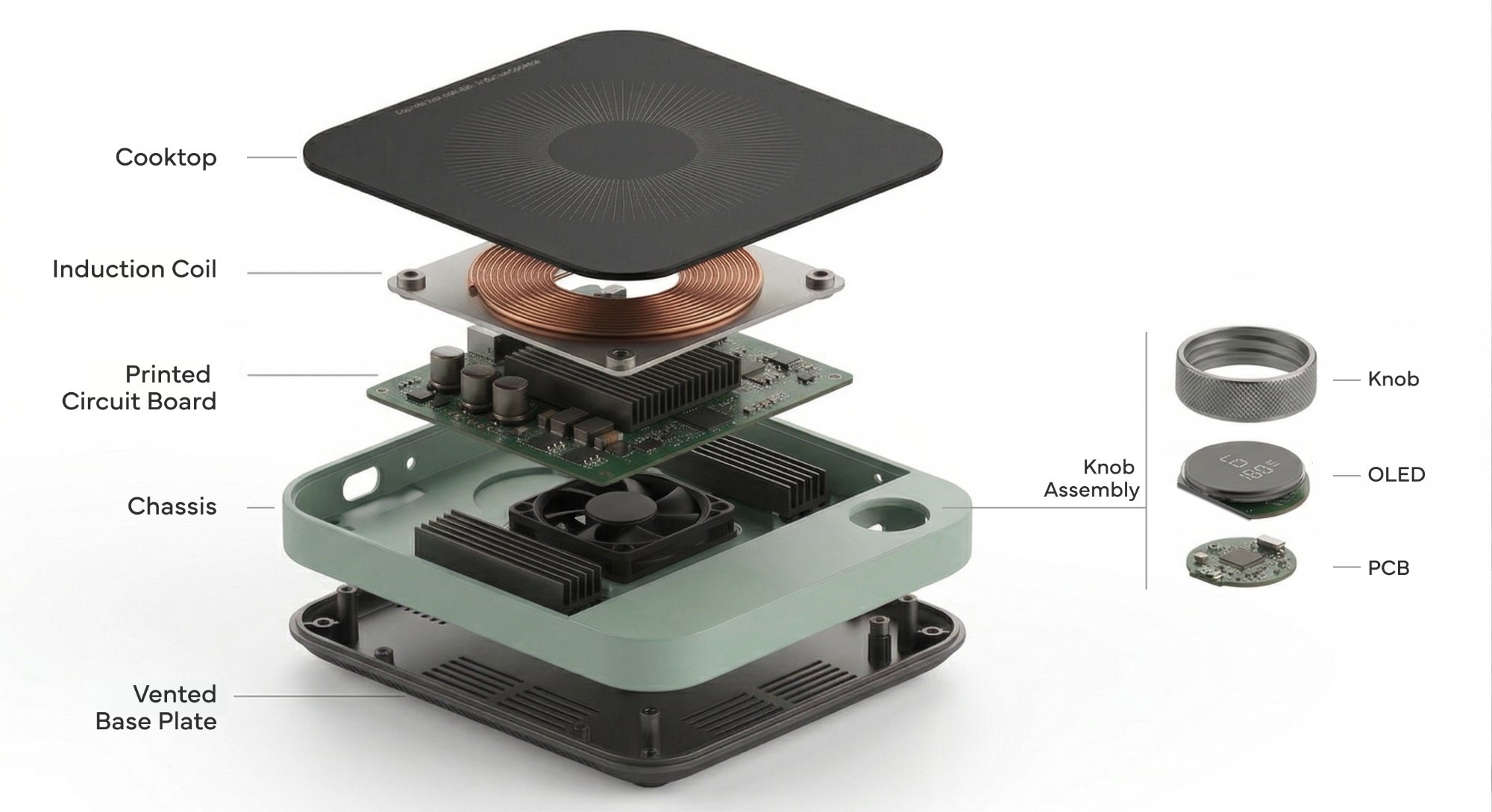
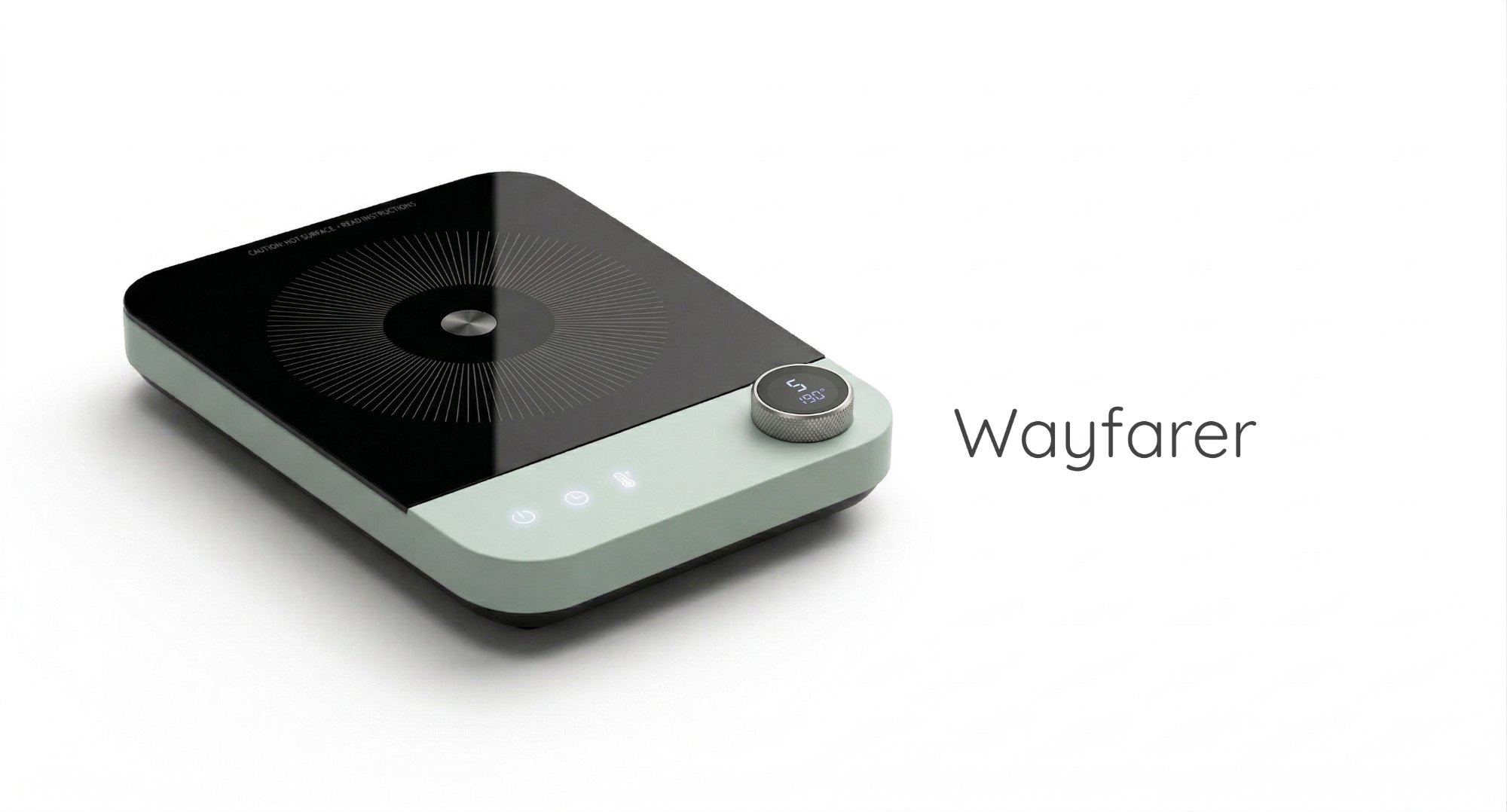
Wayfarer
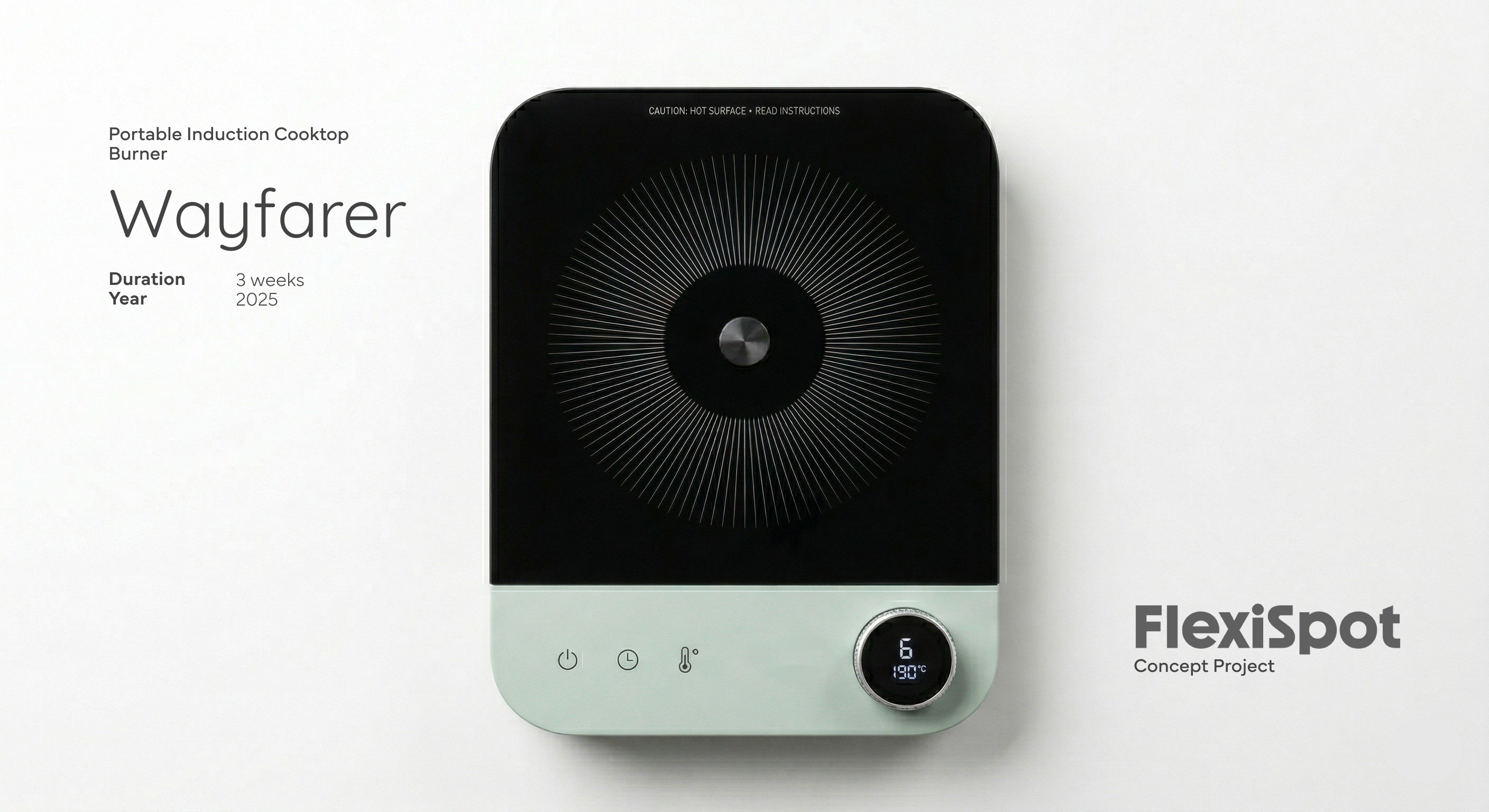
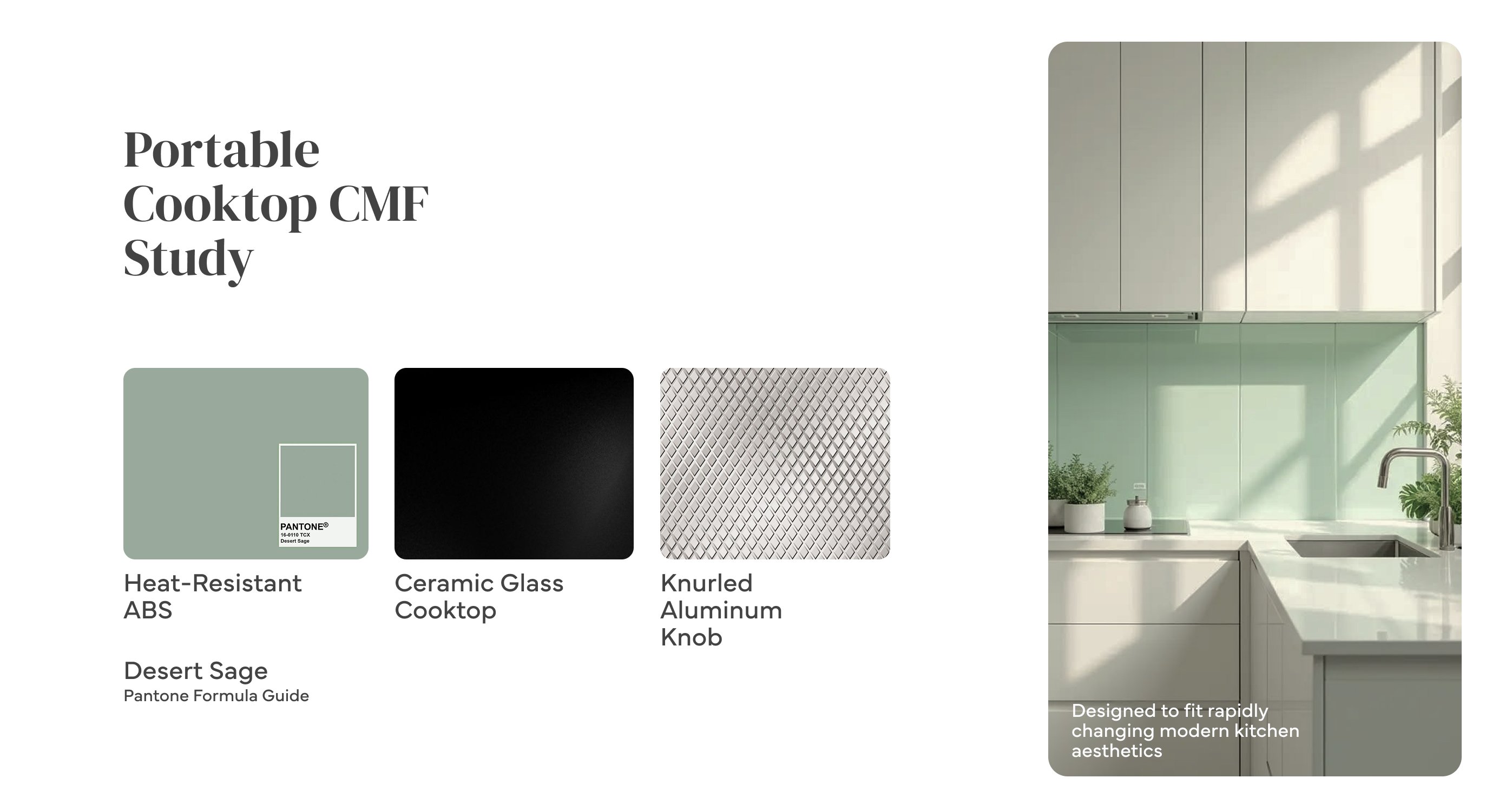
Portable cooktops exist.
But they all look the same.
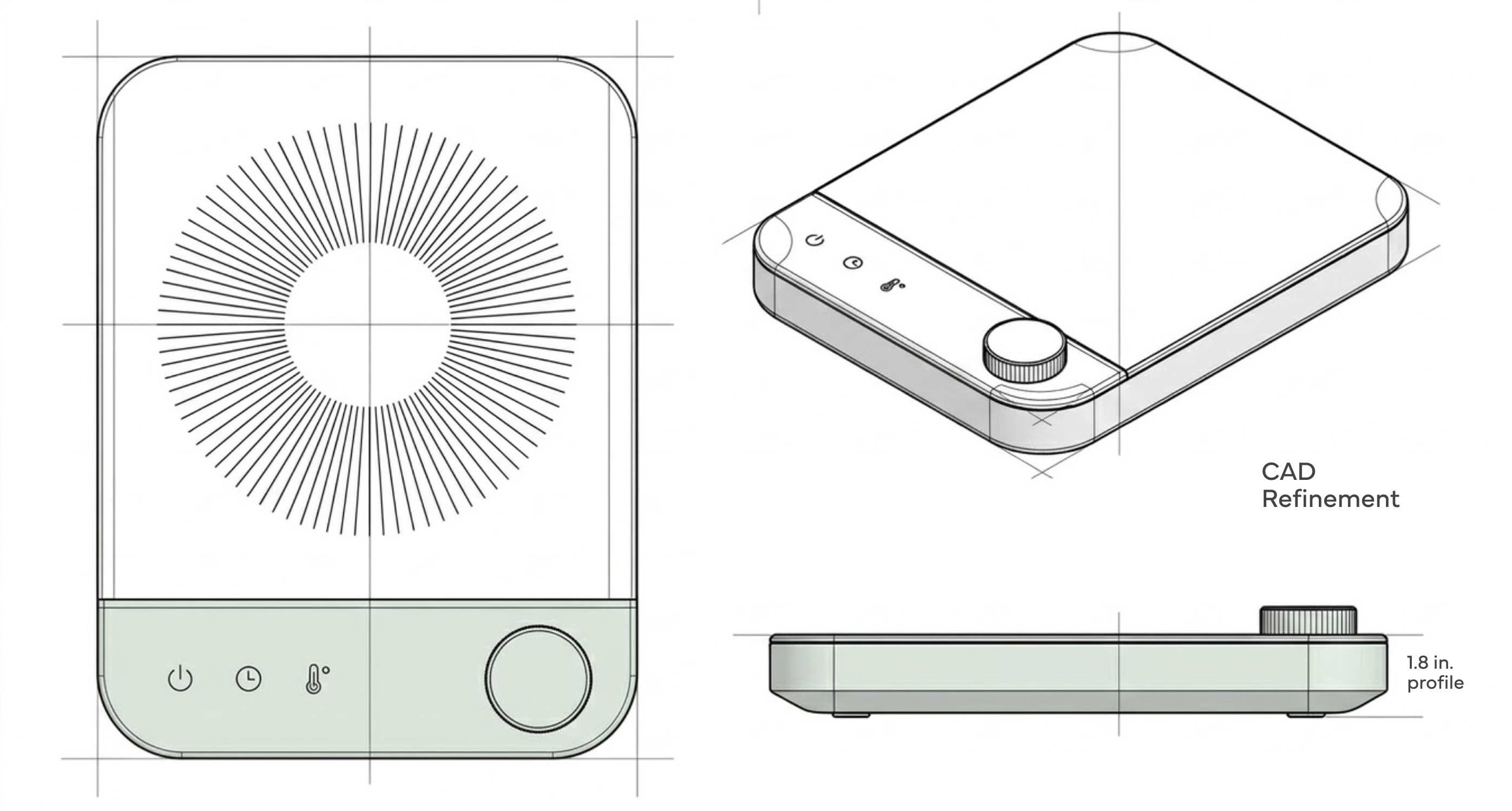
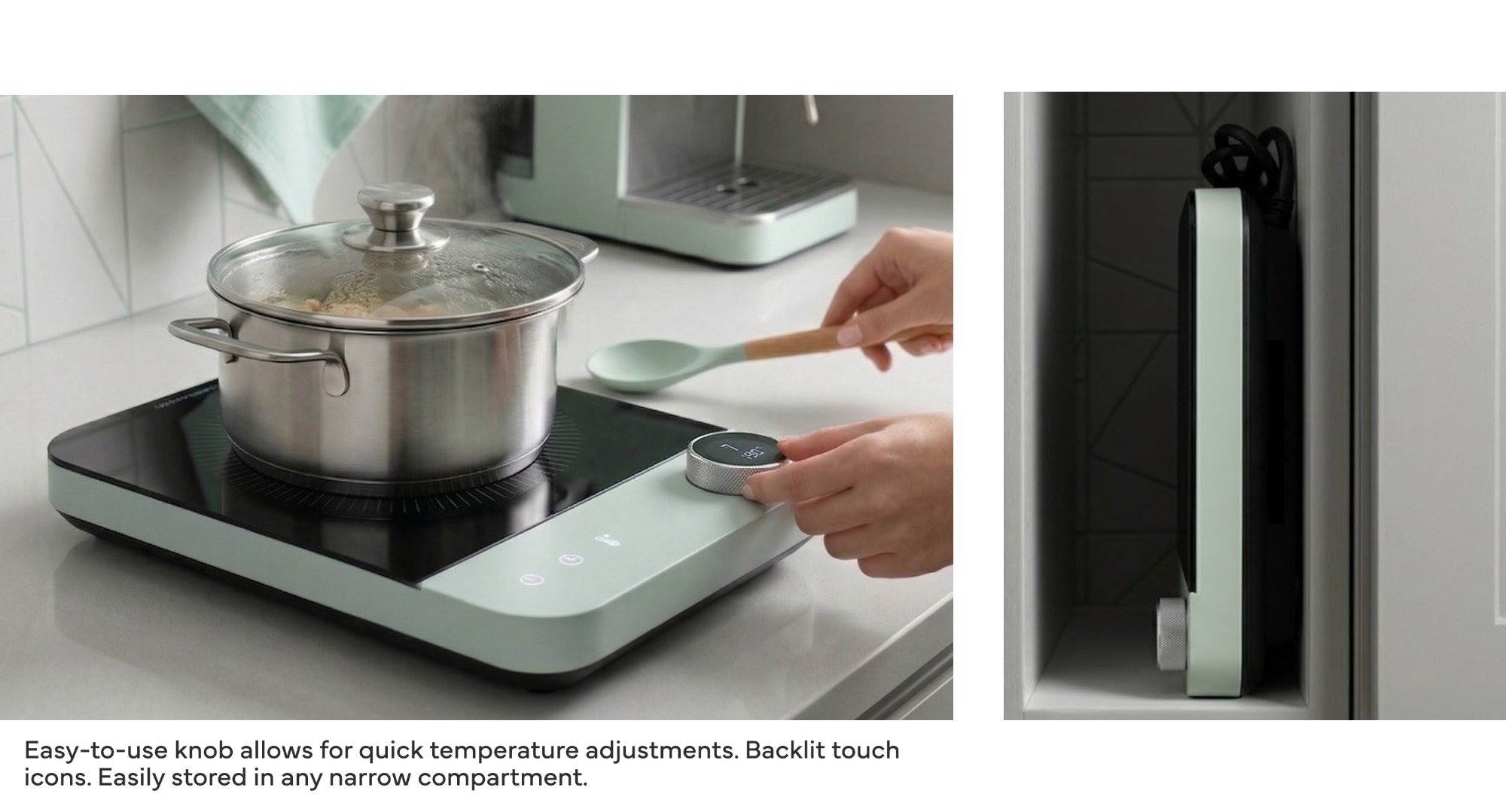
Existing portable induction burners are bulky, cheaply built, and lack any sense of design intentionality — turning a countertop staple into an eyesore.
Addressing
the Pain
Points
Three pain points identified in the portable induction cooktop market, each paired with a strategic design opportunity for Wayfarer.
How Wayfarer Stacks Up
Against the Market
market size (2026)
| Product | Interface | Materials | Price | Control | Convenience | Form Factor |
|---|---|---|---|---|---|---|
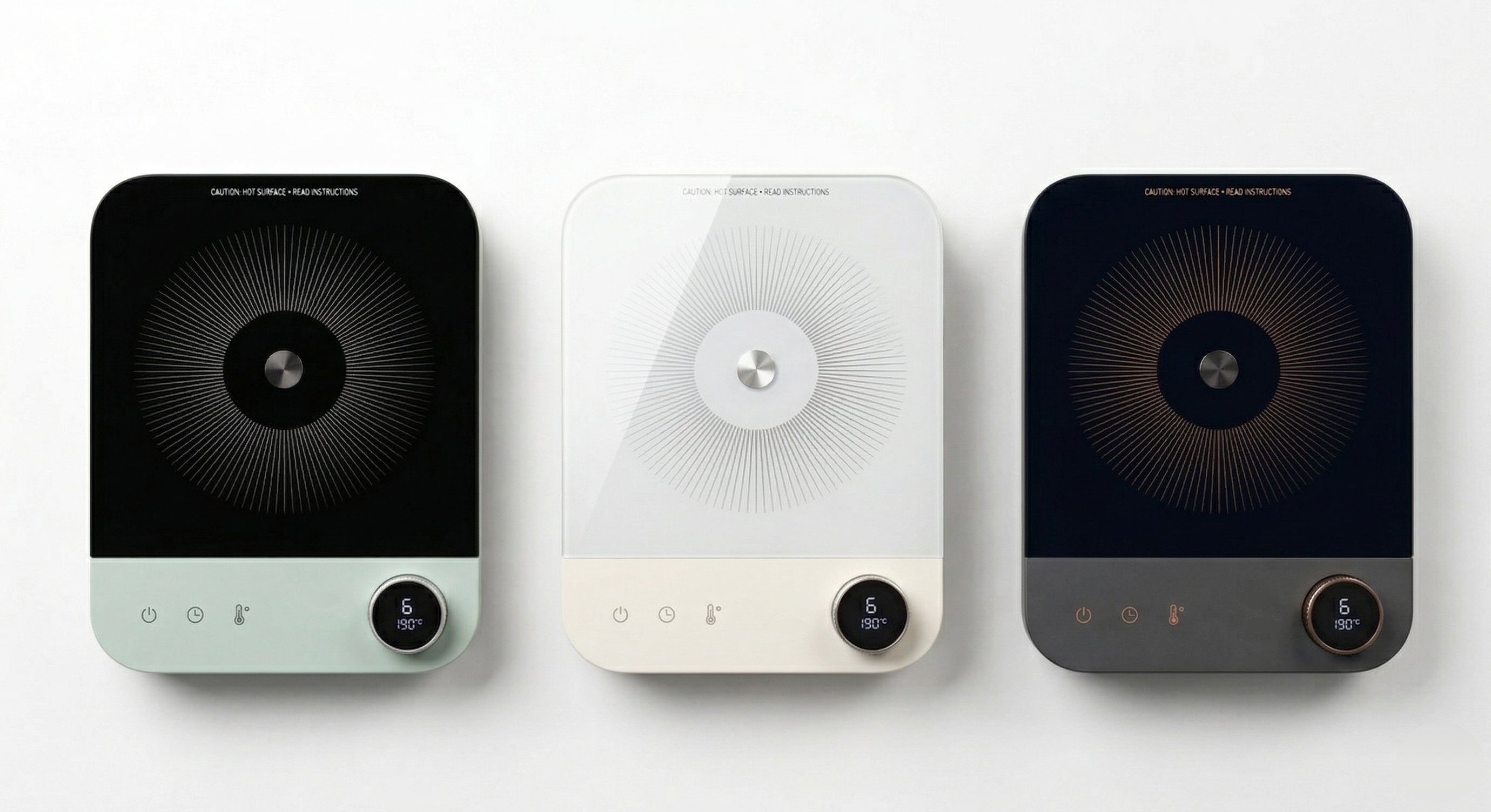
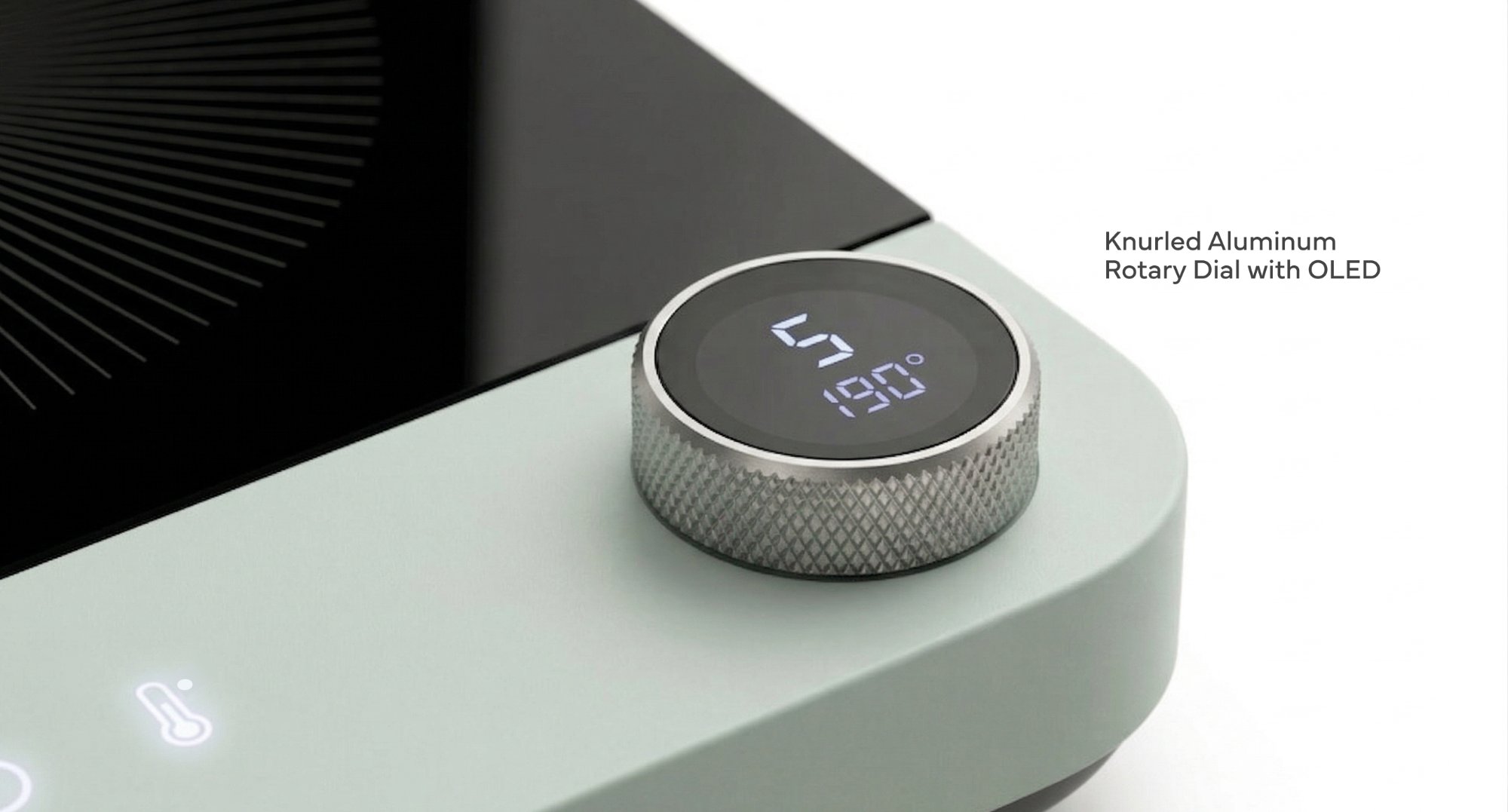
| Wayfarer (FlexiSpot) | Single dial + touch strip | Aluminum / Ceramic glass | $129* | Single knob control | Plug and cook setup | Stores vertically |
| Duxtop 9600LS | LCD touch panel | Plastic / Glass | $72 | 20 temp presets | Quick boil button | Child safety lock |
| Breville Control Freak | Digital + probe | Stainless steel | $1,500 | Probe-based temp control | ±1°F precision | Professional grade build |
| NuWave PIC Flex | Button panel | Plastic / Glass | $60 | 3 wattage settings | 45 temp levels | Lightweight 4.4 lbs |
| GreenPan 1800W | Touch panel | Plastic / Ceramic | $85 | Crevice-free surface | Even heat spread | Child lock |
| IKEA TILLREDA | Touch buttons | Plastic / Glass | $65 | Minimalist aesthetic | Ultra lightweight | Budget friendly |
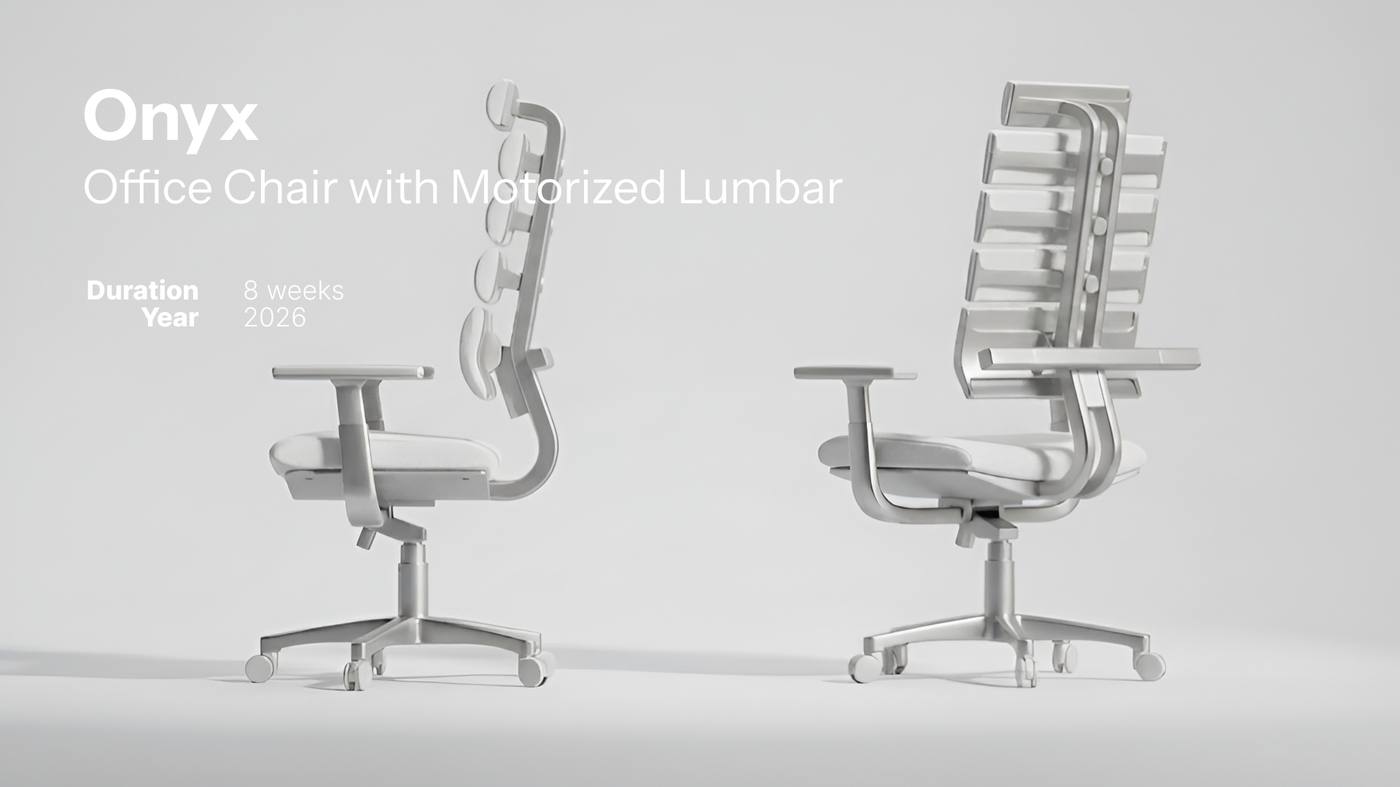
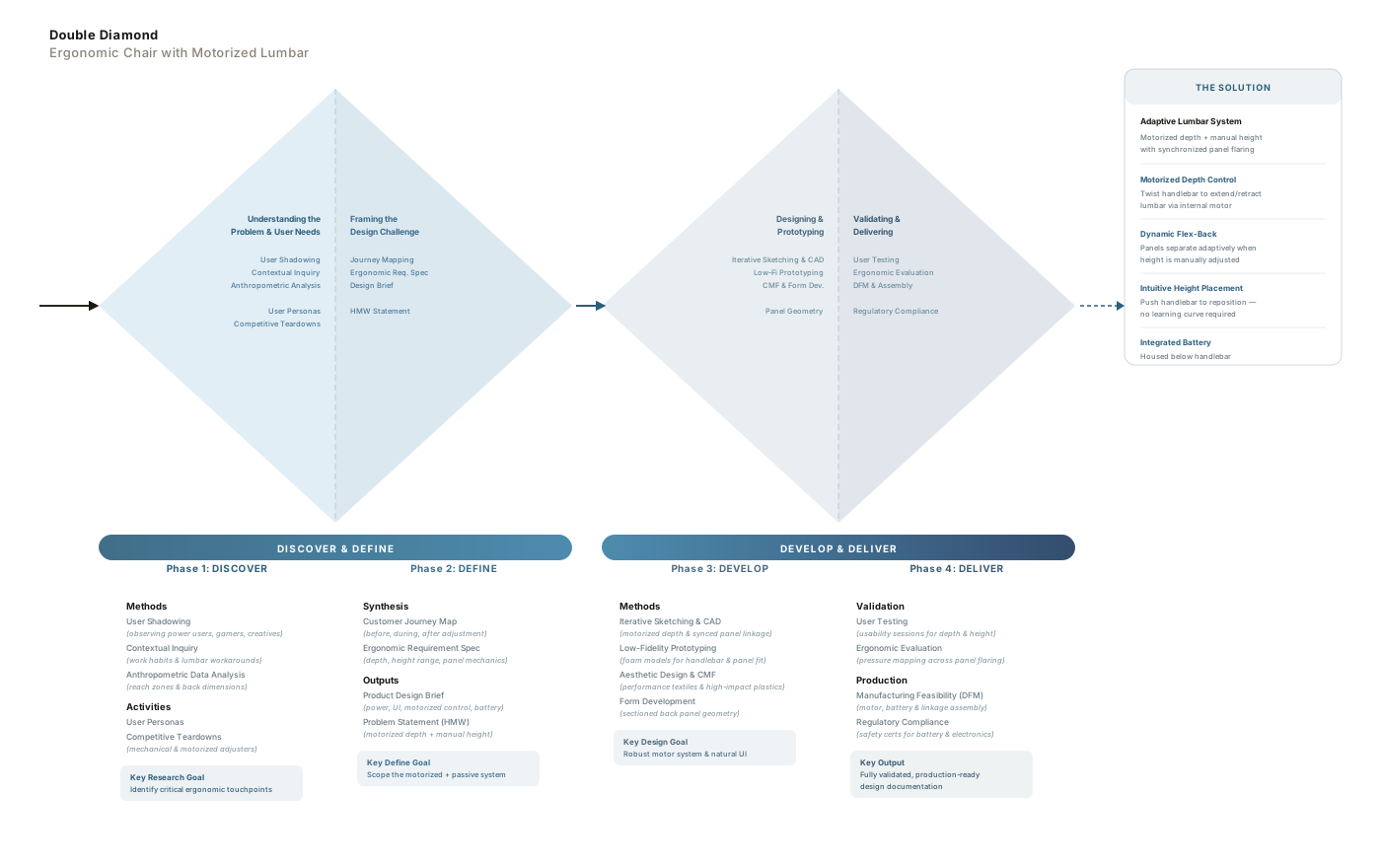
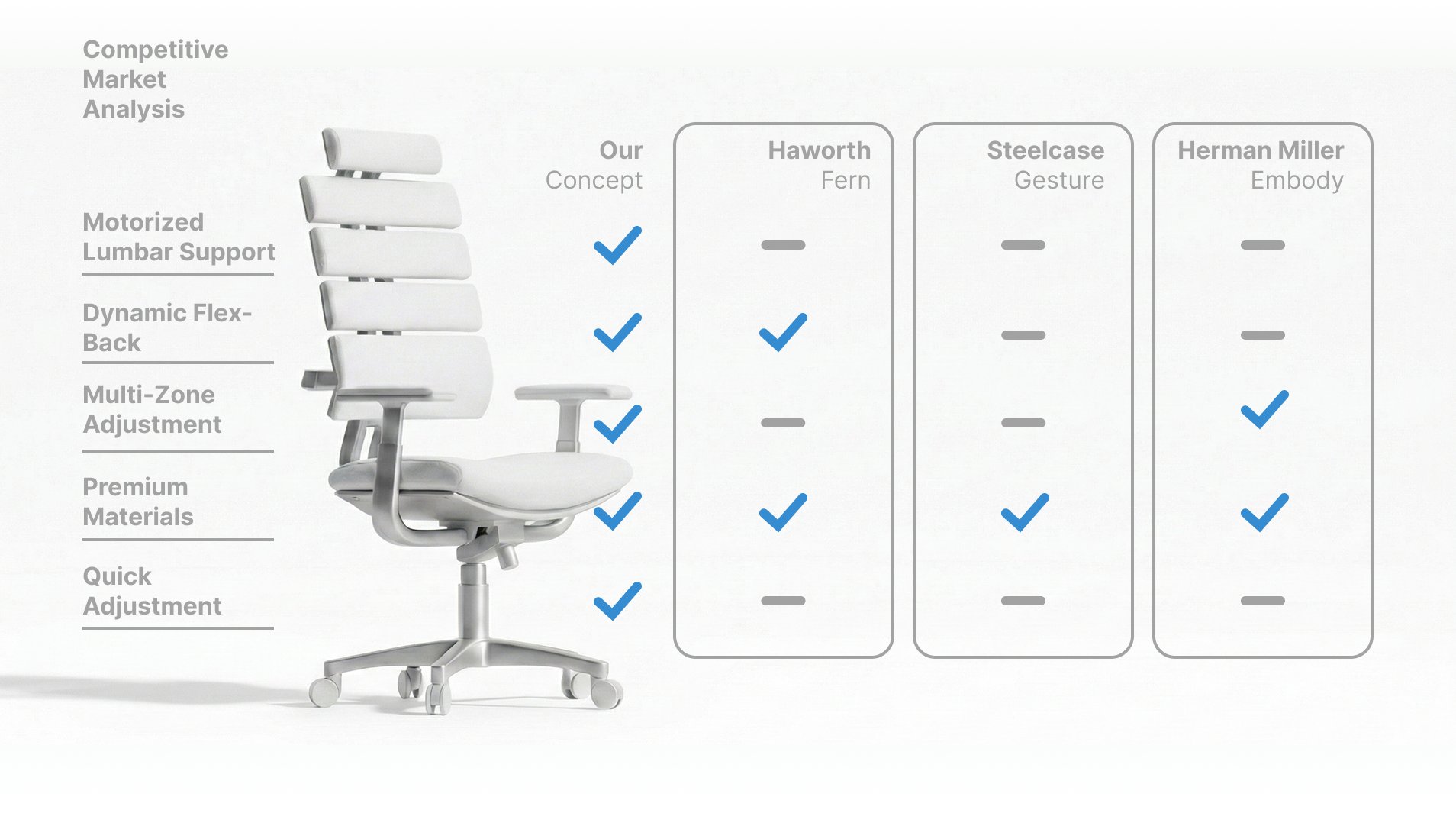
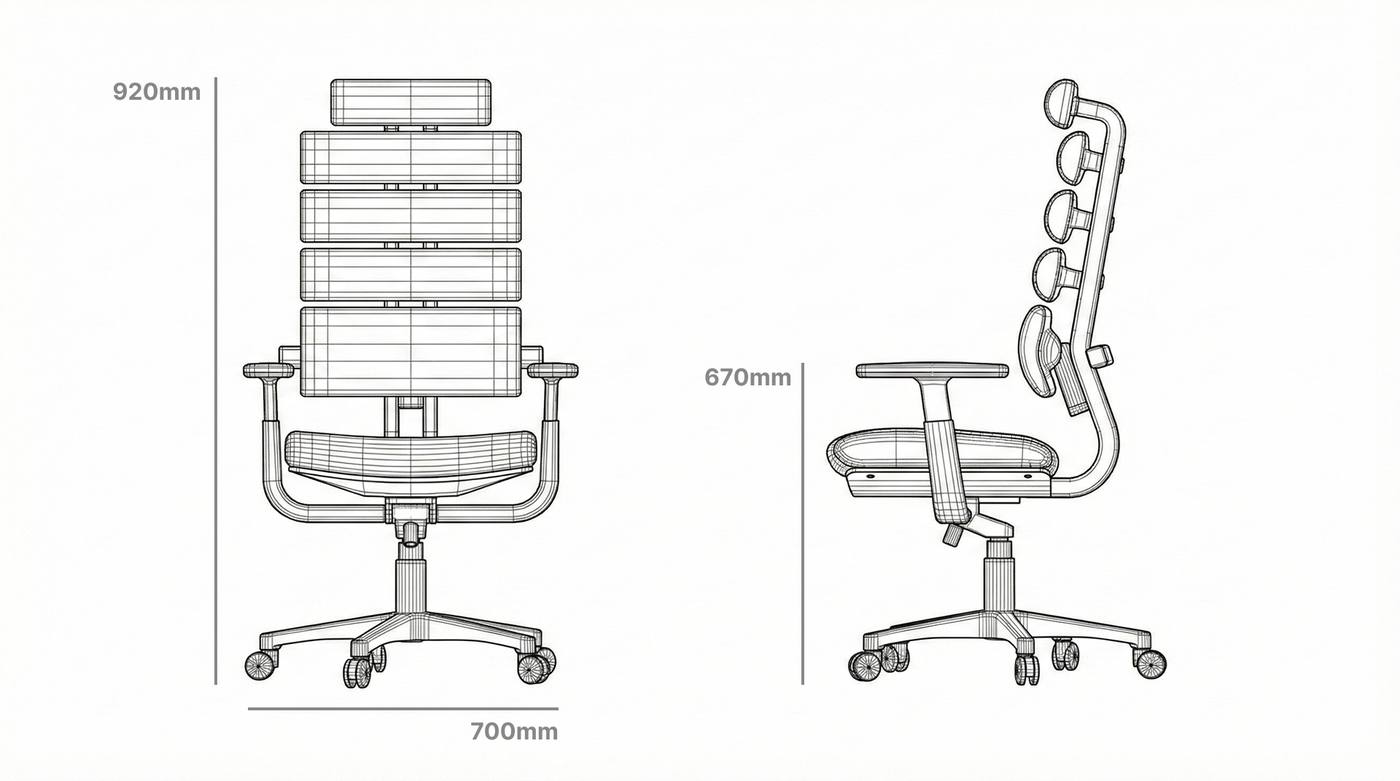
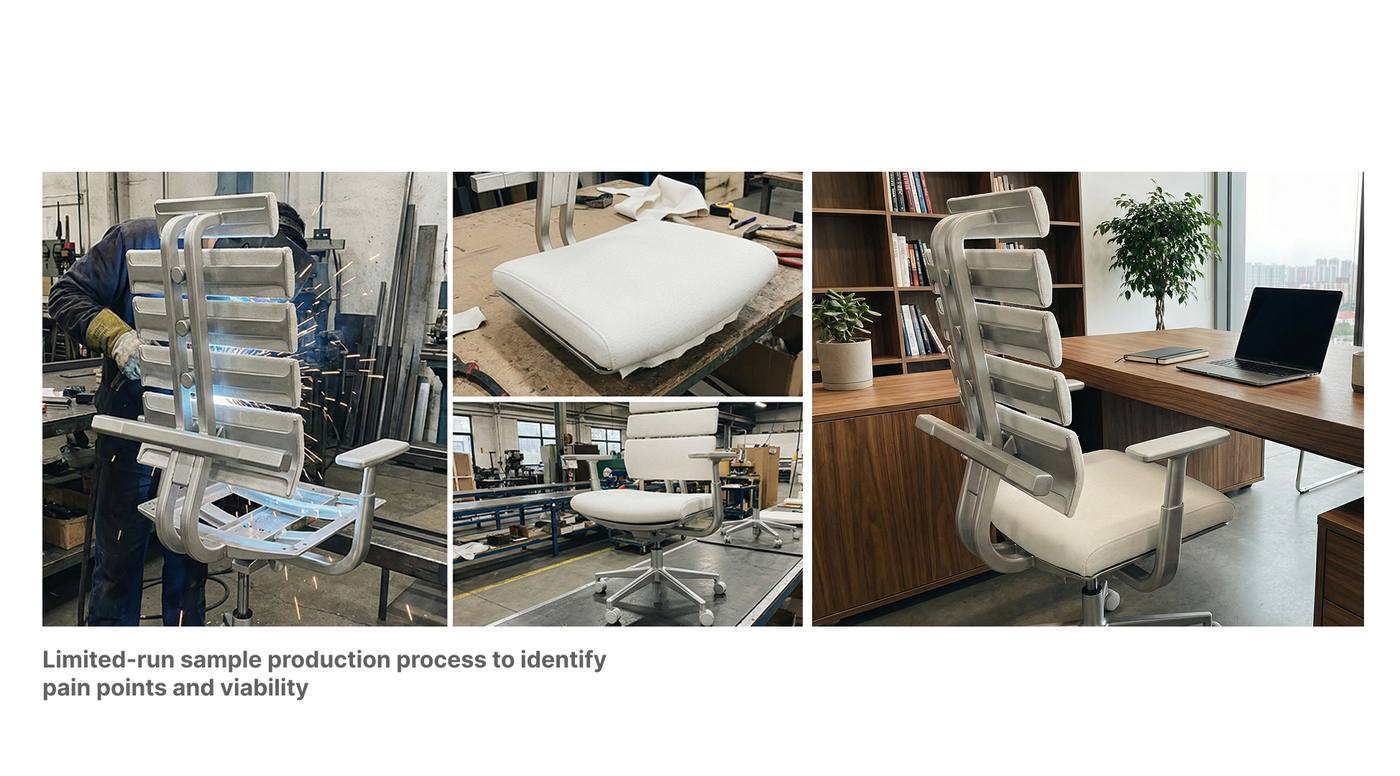
Onyx Chair
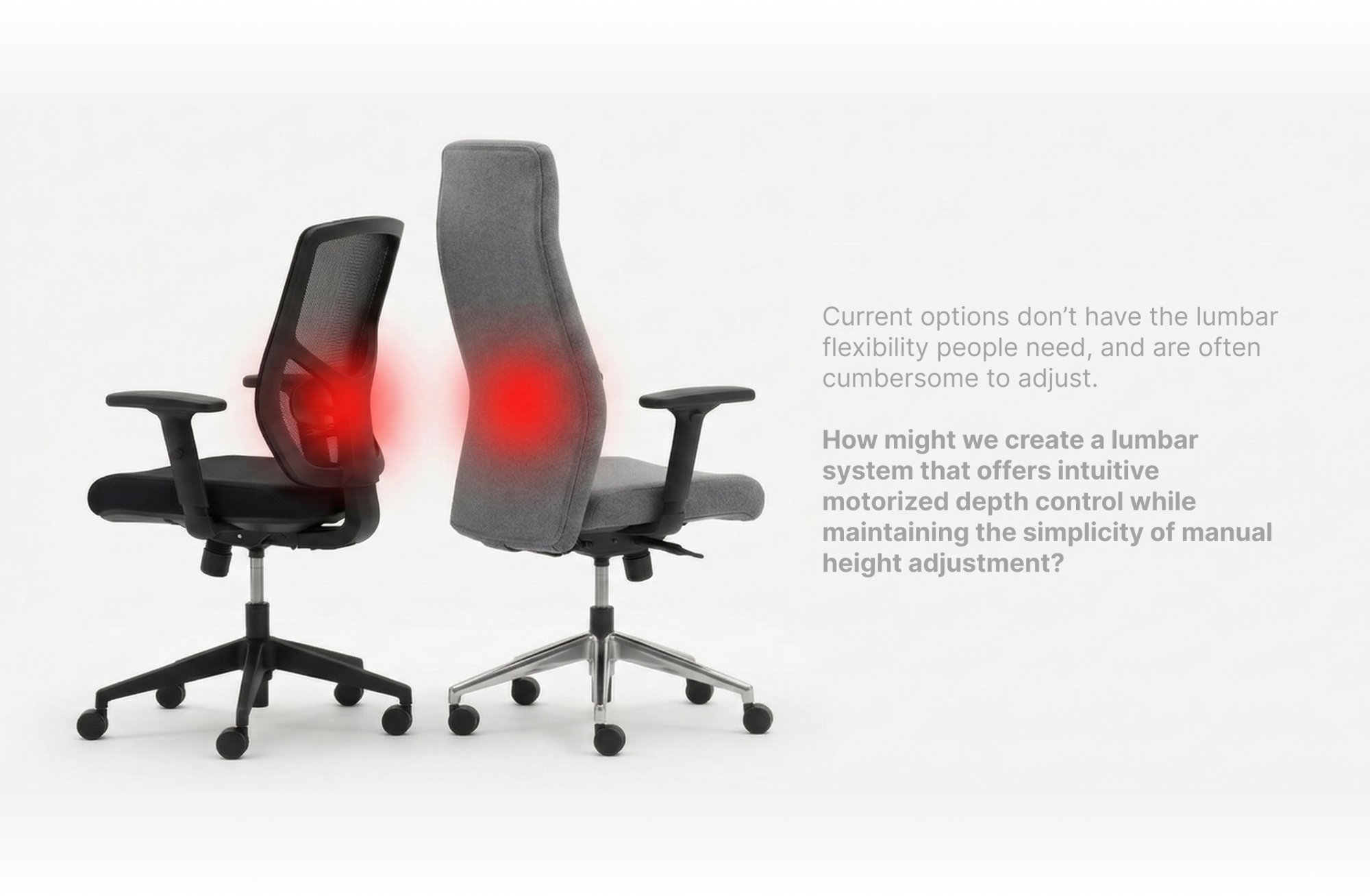
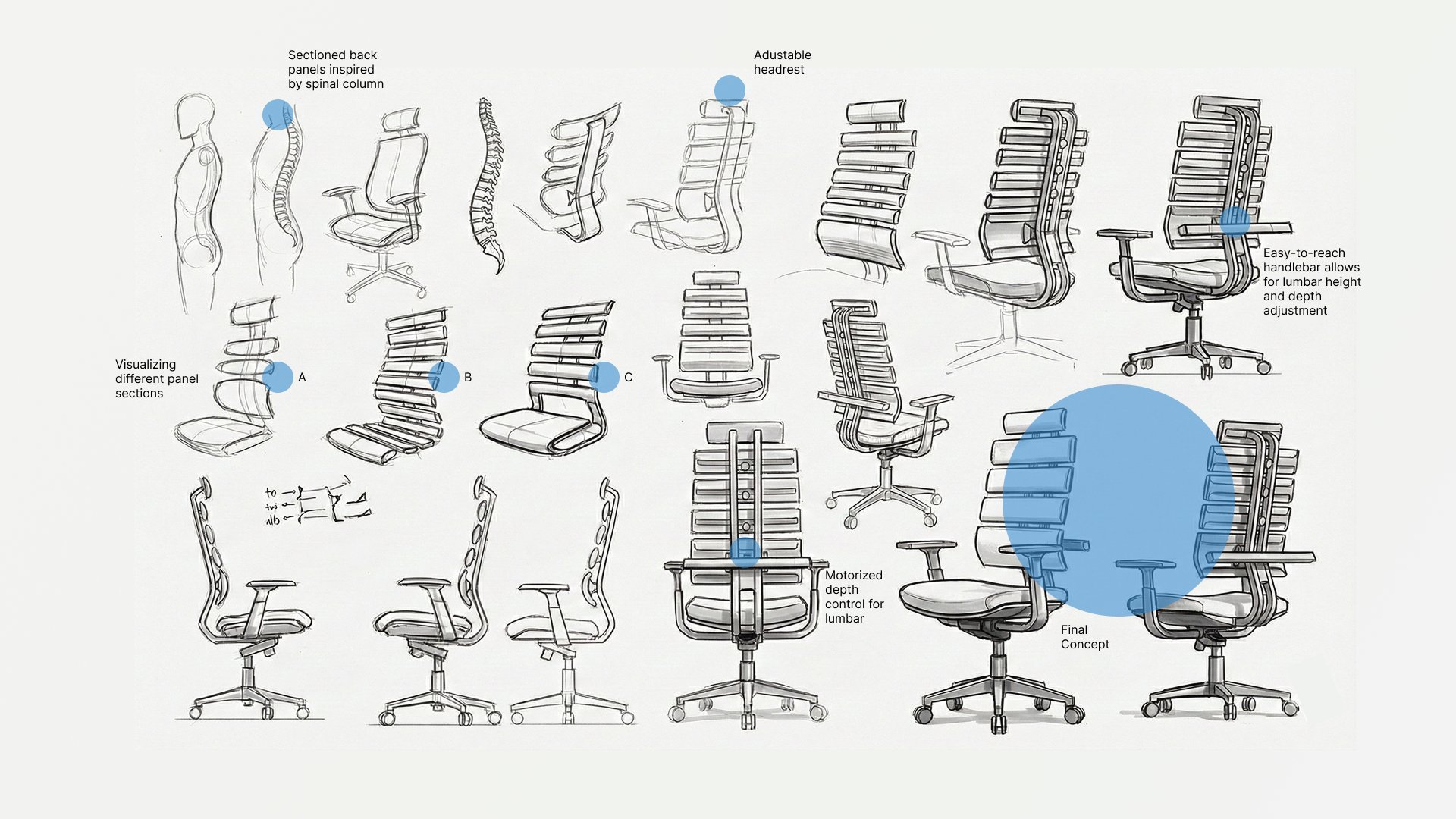
Lumbar support exists, but it’s
never intuitive or precise.
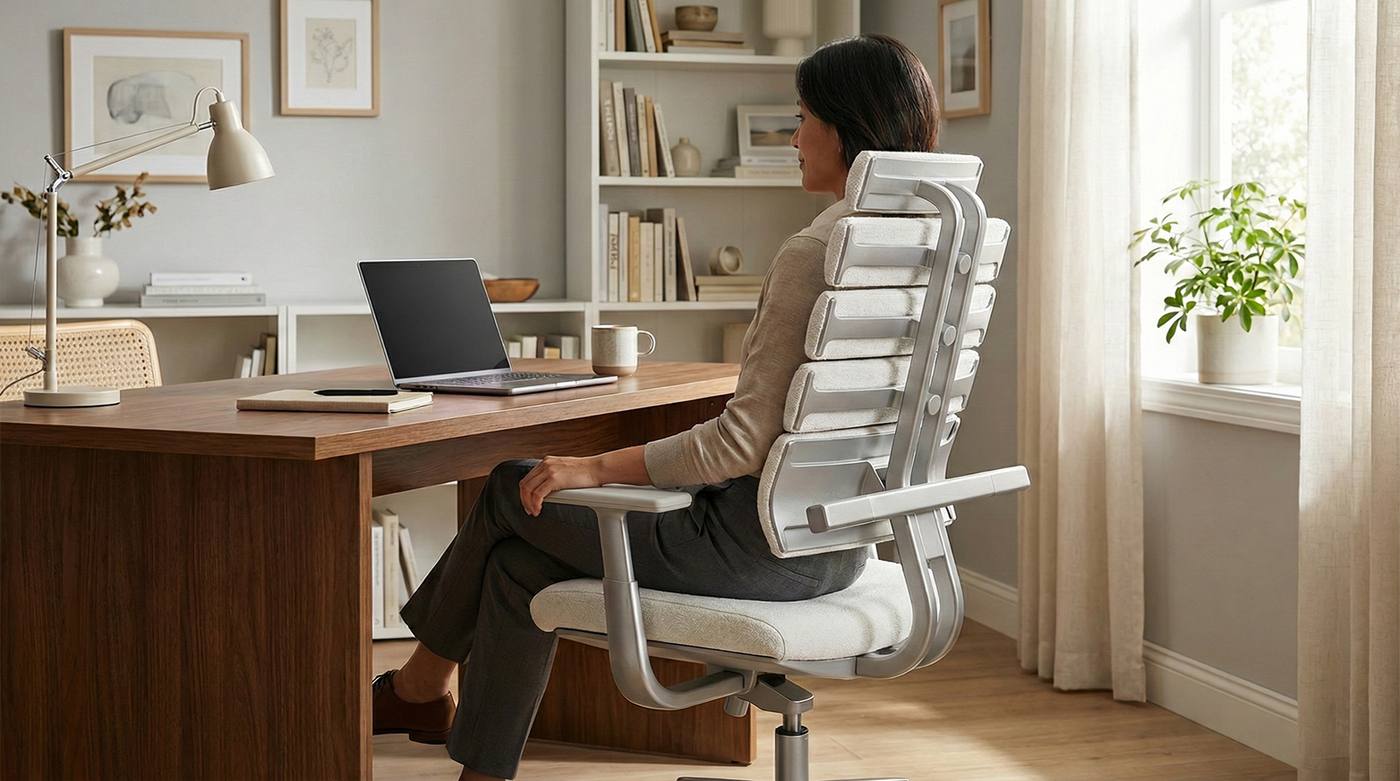
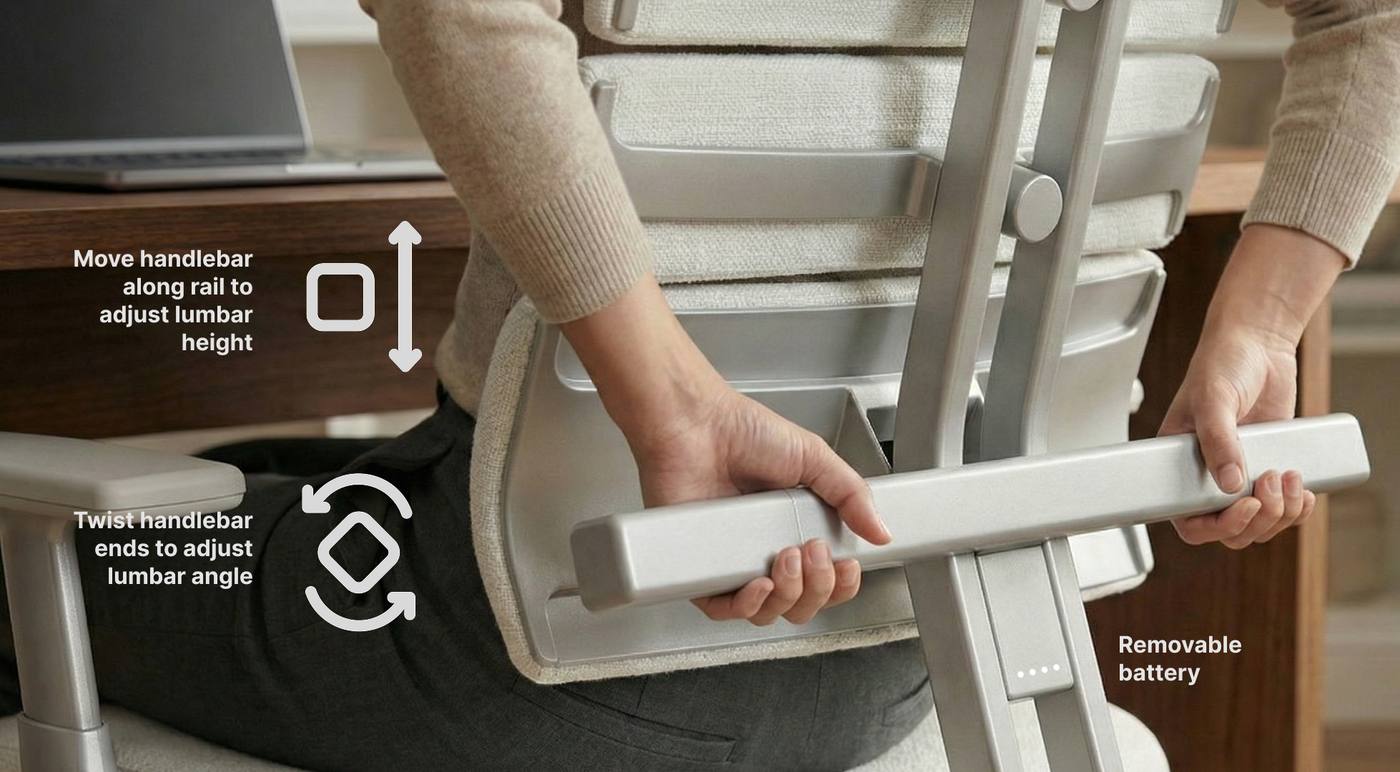
Existing lumbar adjustments are too cumbersome — requiring awkward manual depth changes mid-workday. Office workers sacrifice long-term spinal health for short-term convenience.
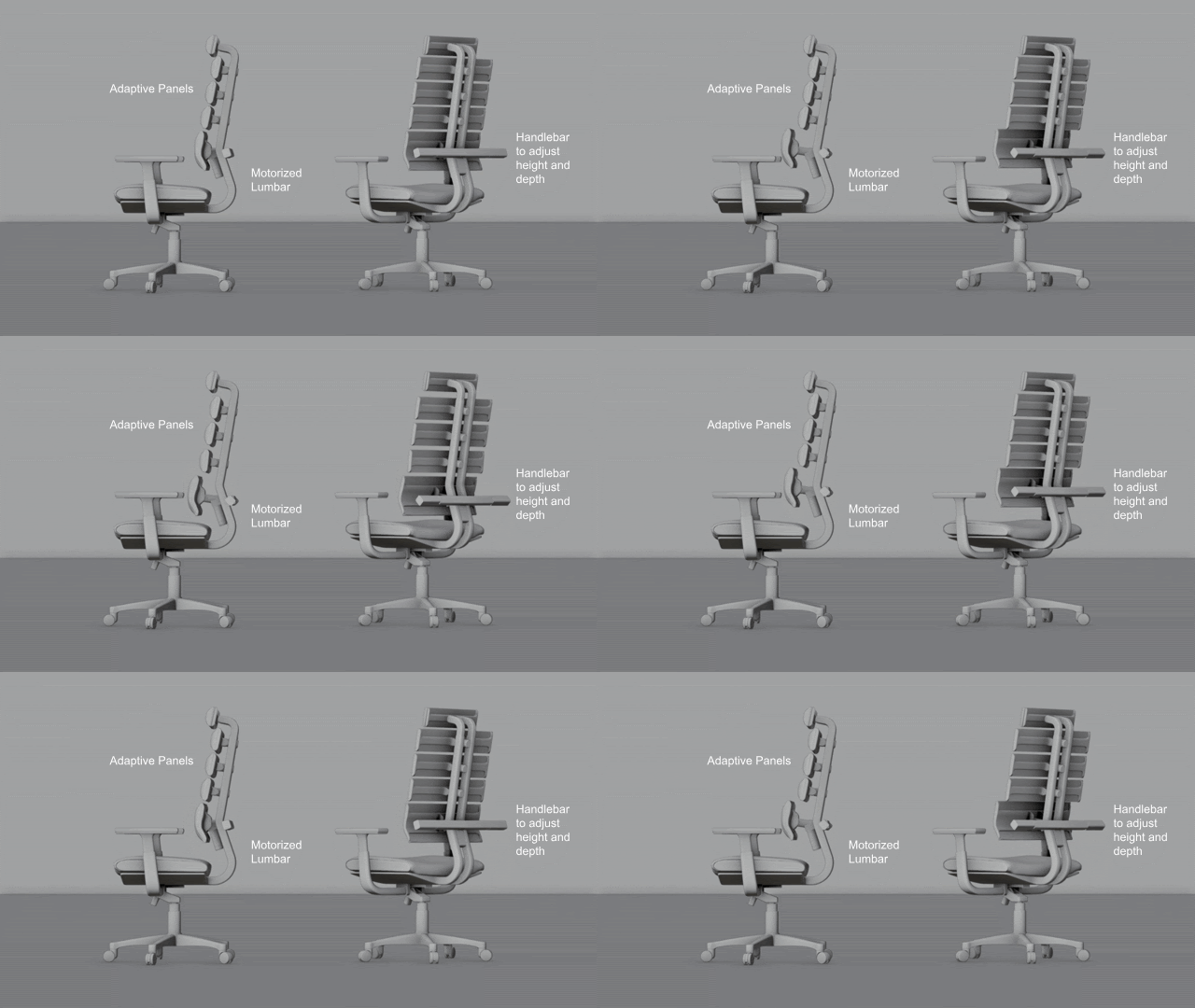
This animation demonstrates the motorized lumbar depth control in action. As the motor engages, the lumbar support extends outward to meet the user’s lower back — providing precise, effortless adjustment without reaching behind the chair.
When the lumbar height is manually repositioned, the sectioned back panels adaptively separate and redistribute, conforming to the spine’s natural curvature at the new support point. This ensures consistent ergonomic contact regardless of where the user places the lumbar.
AirBrace
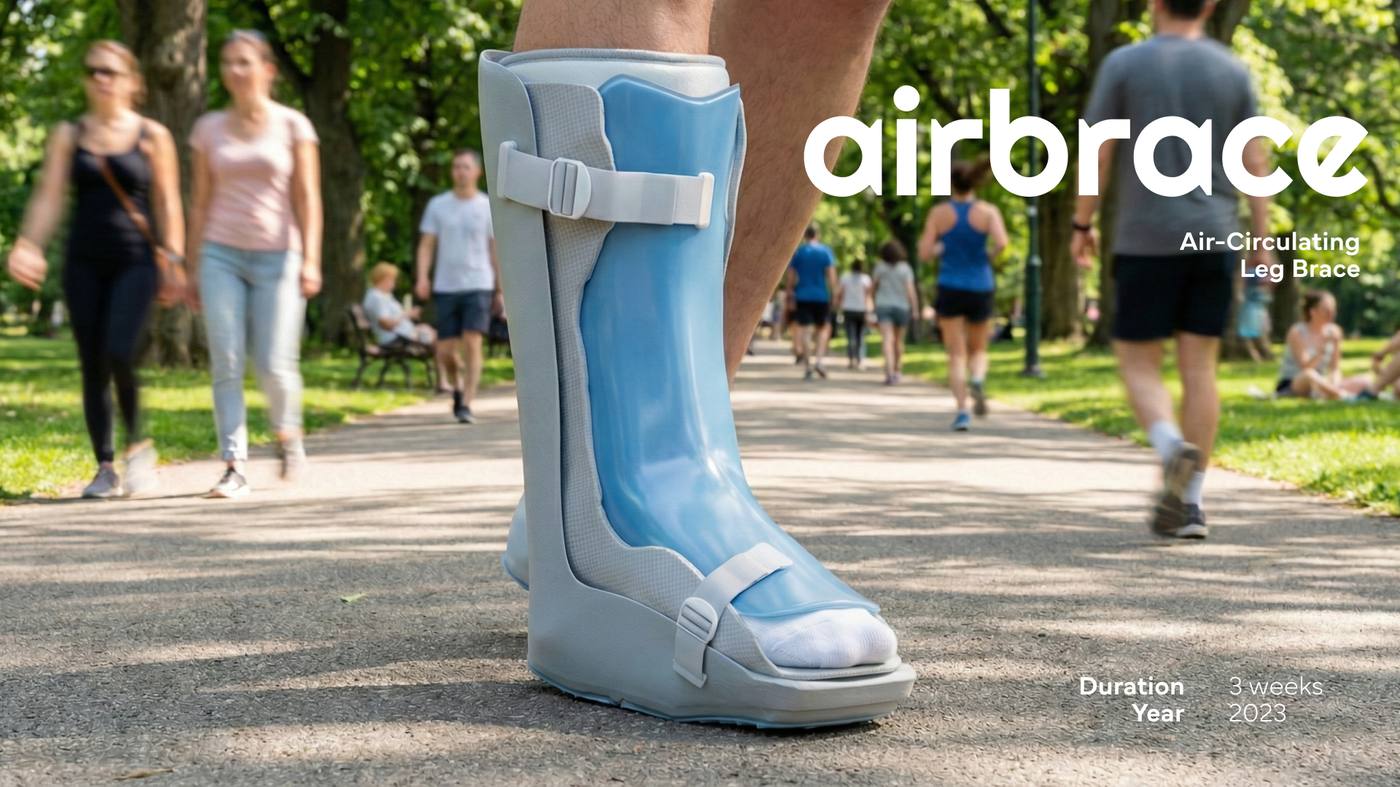
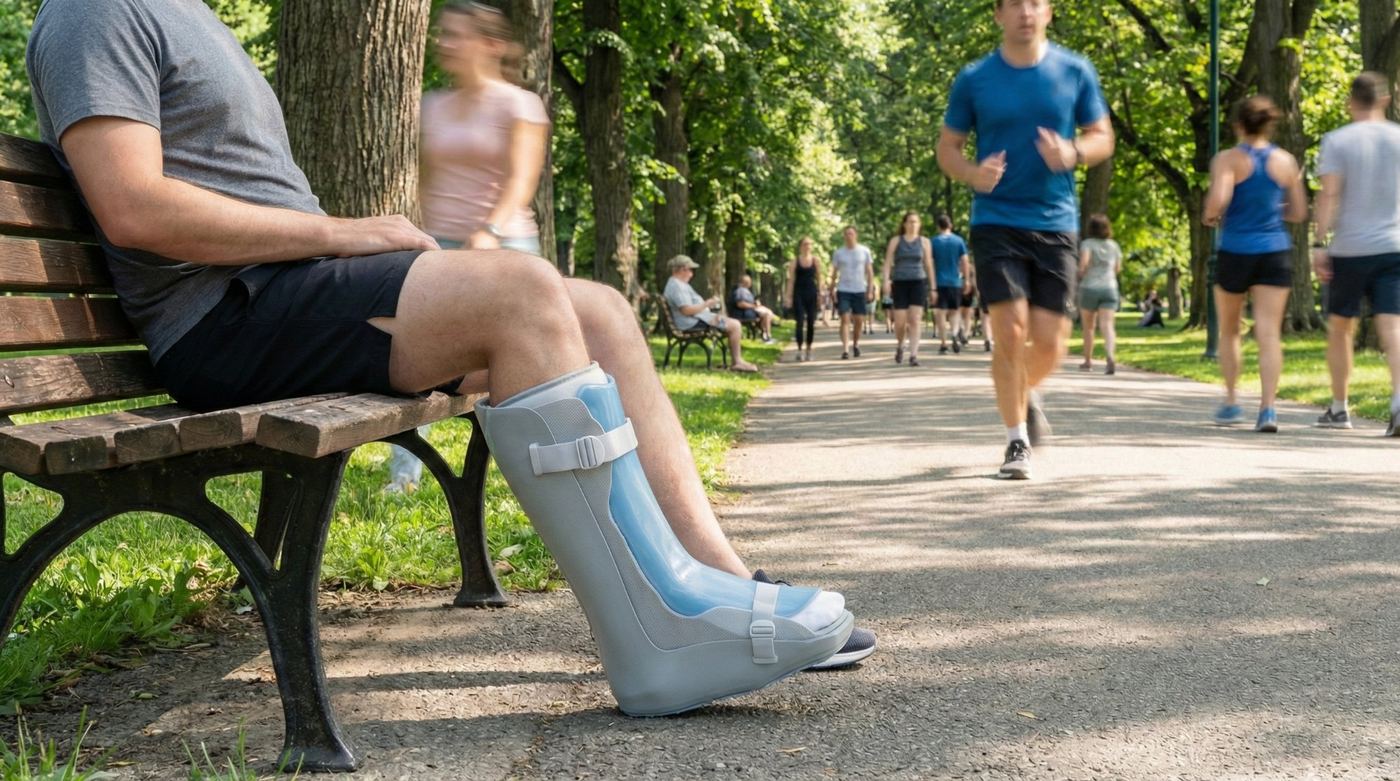
A broken leg is hard enough.
Your brace shouldn't make it worse.
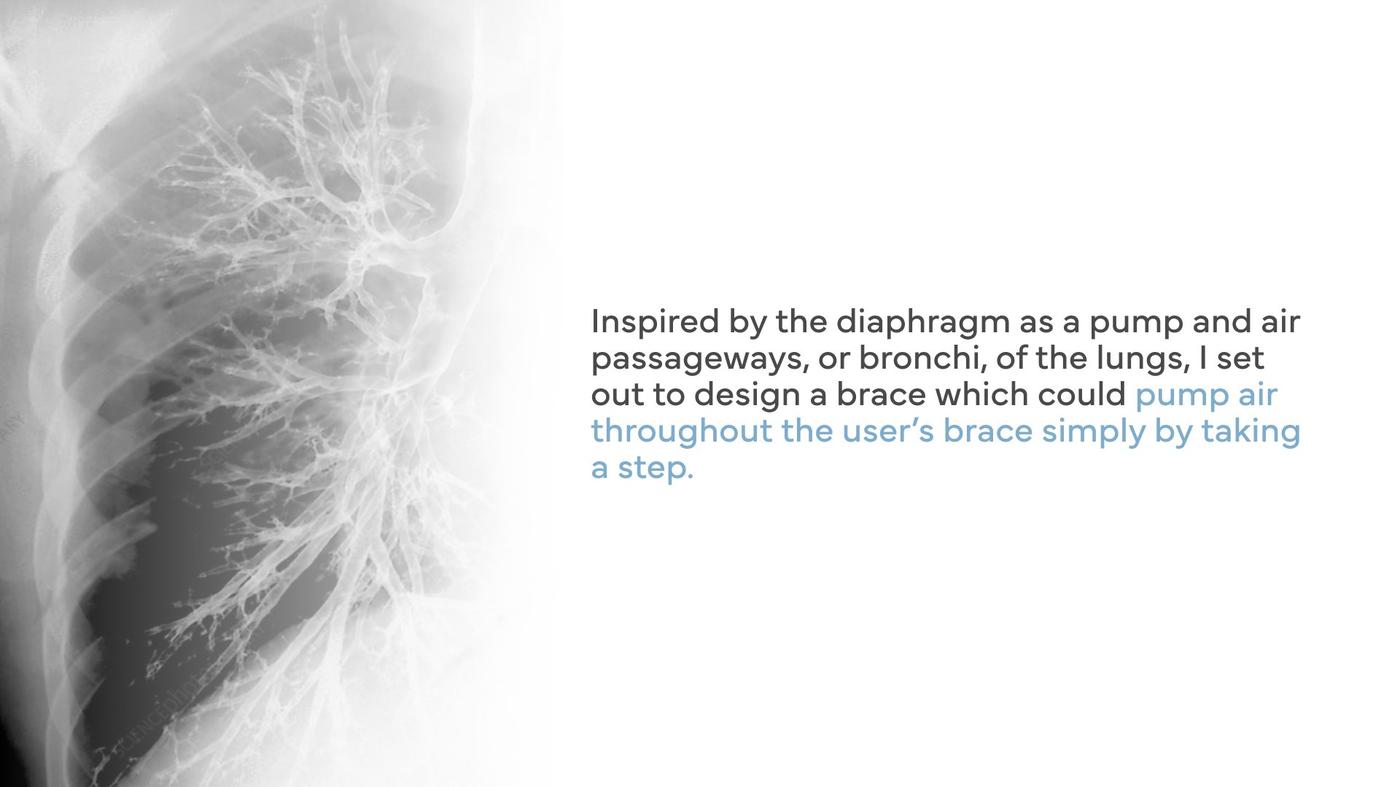
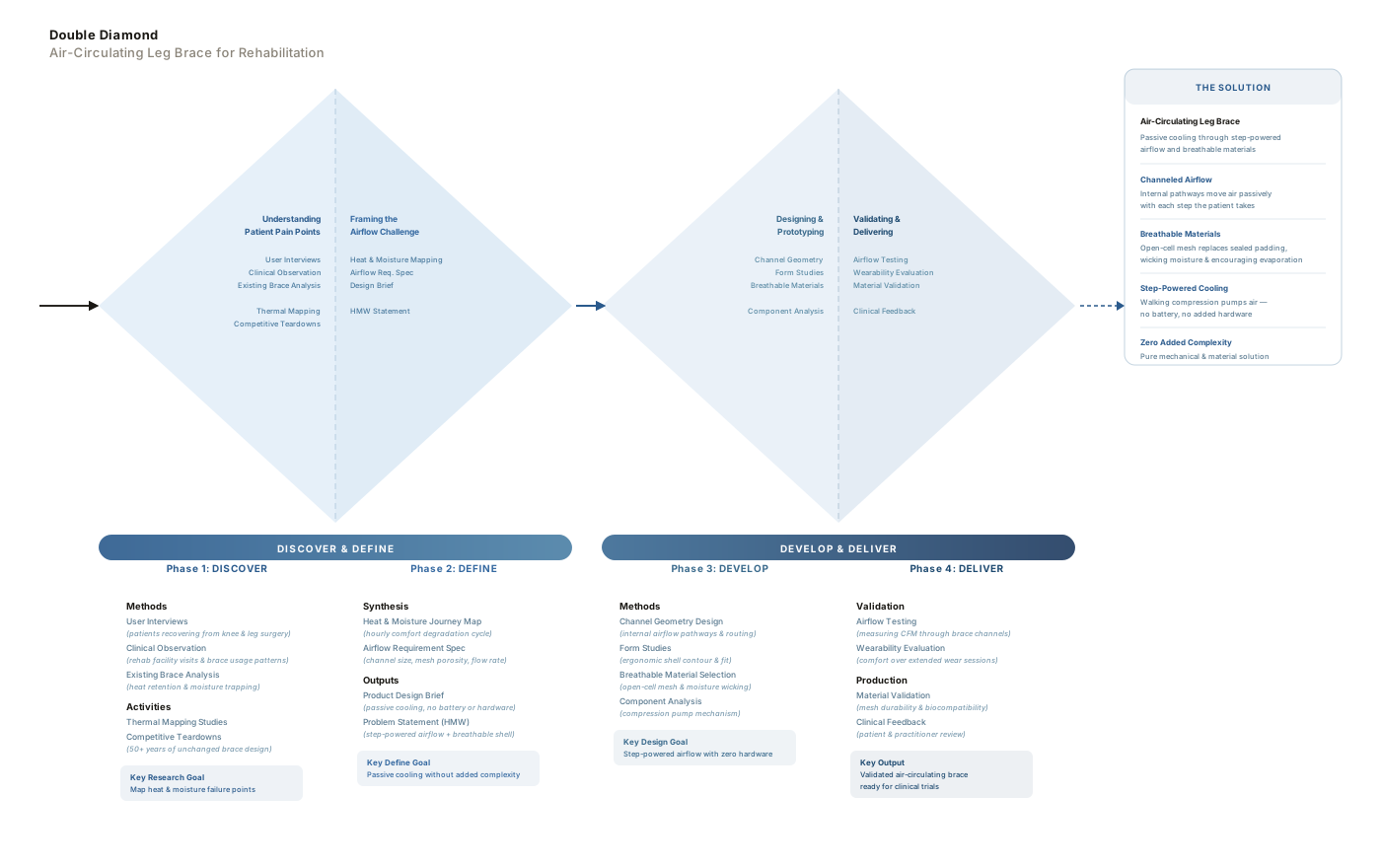
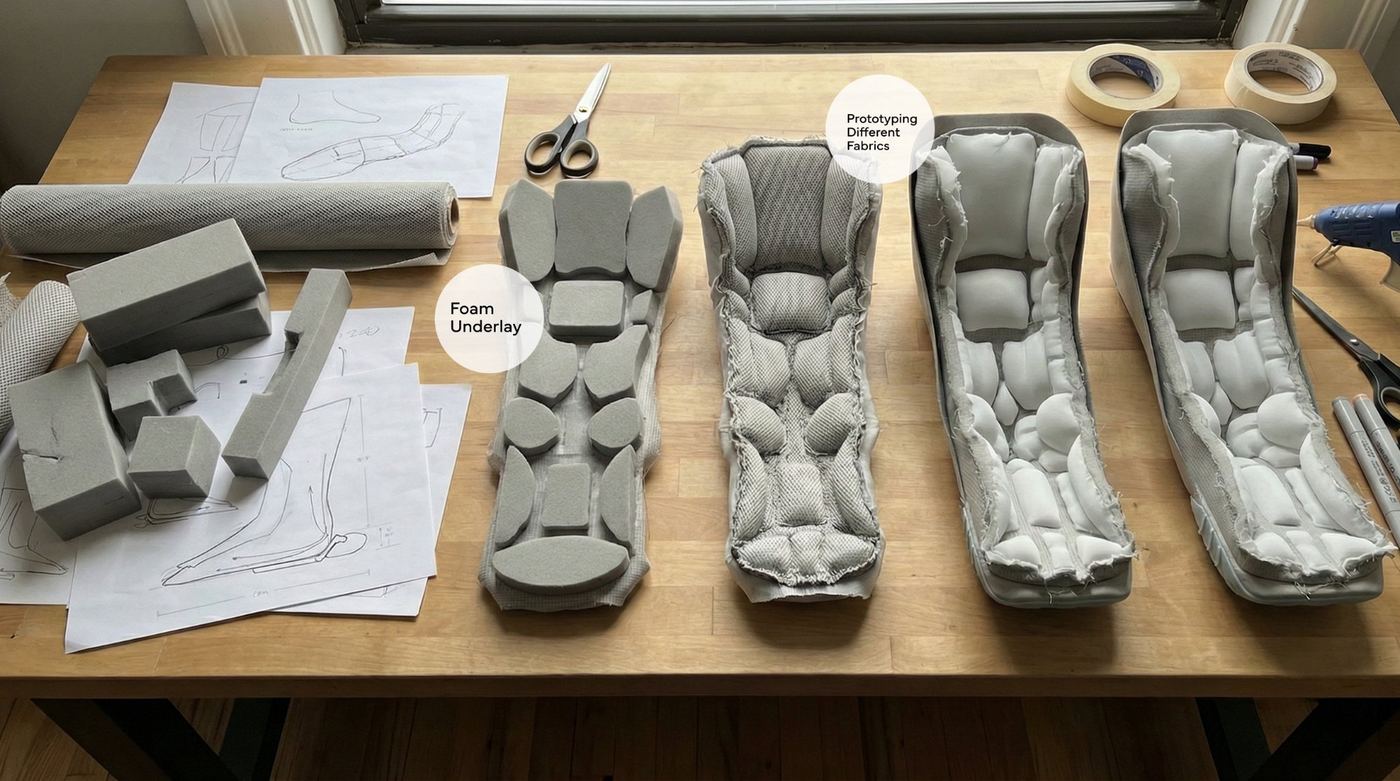
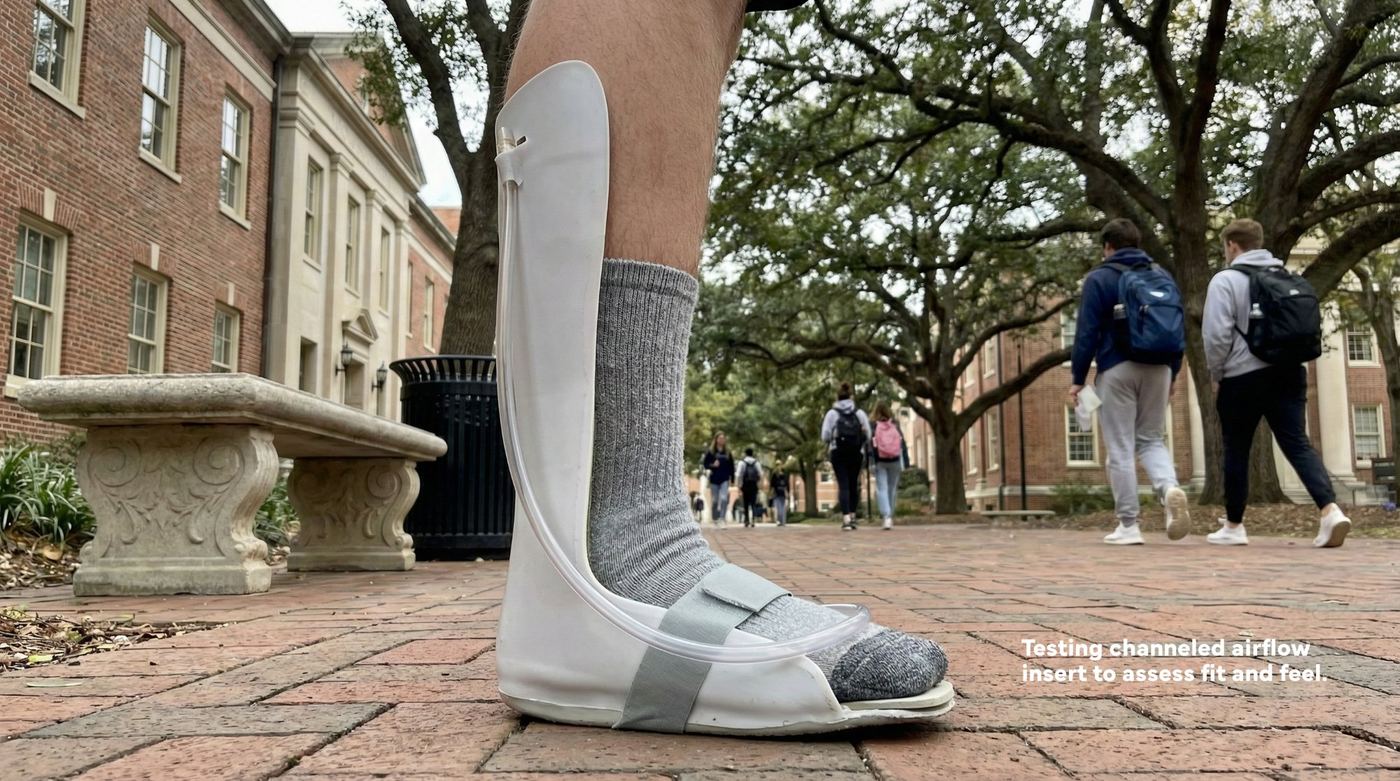
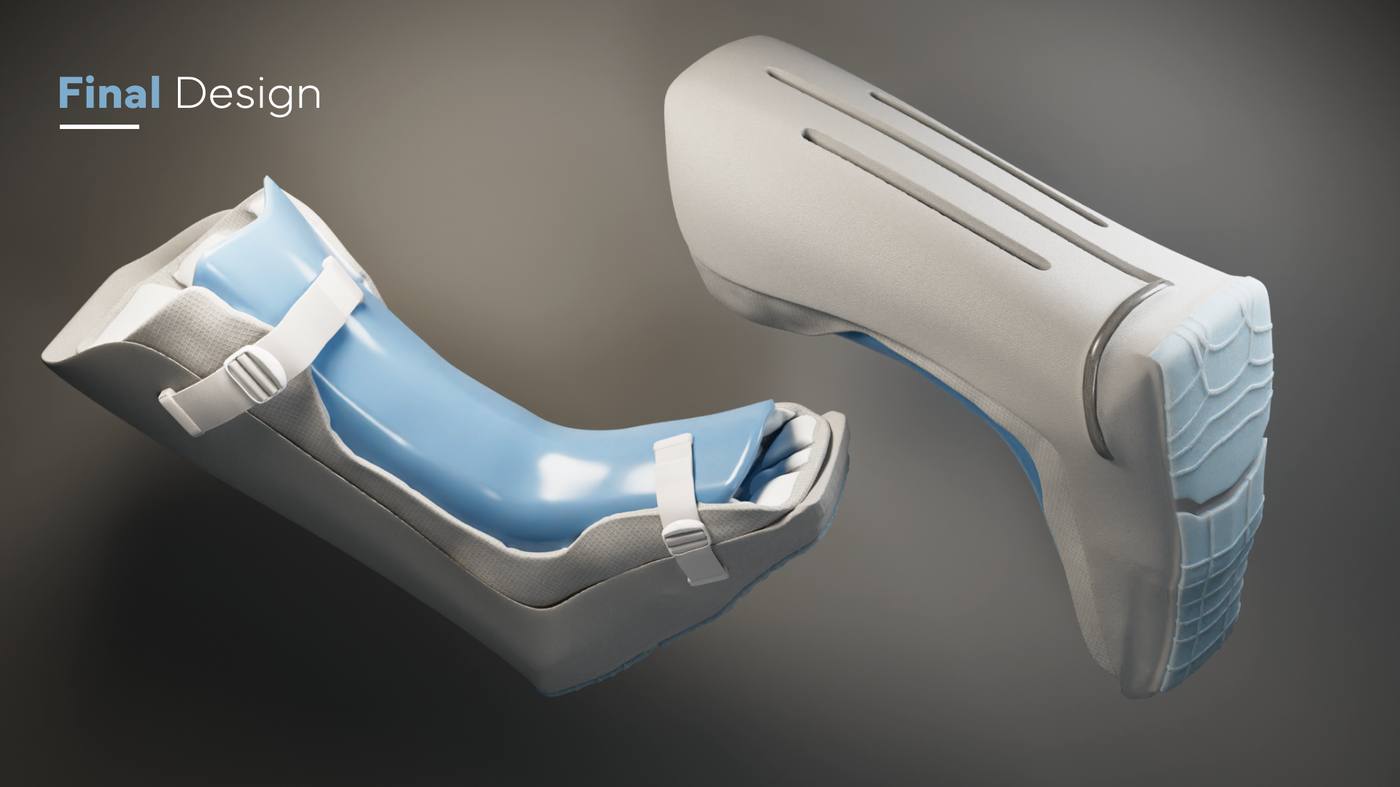
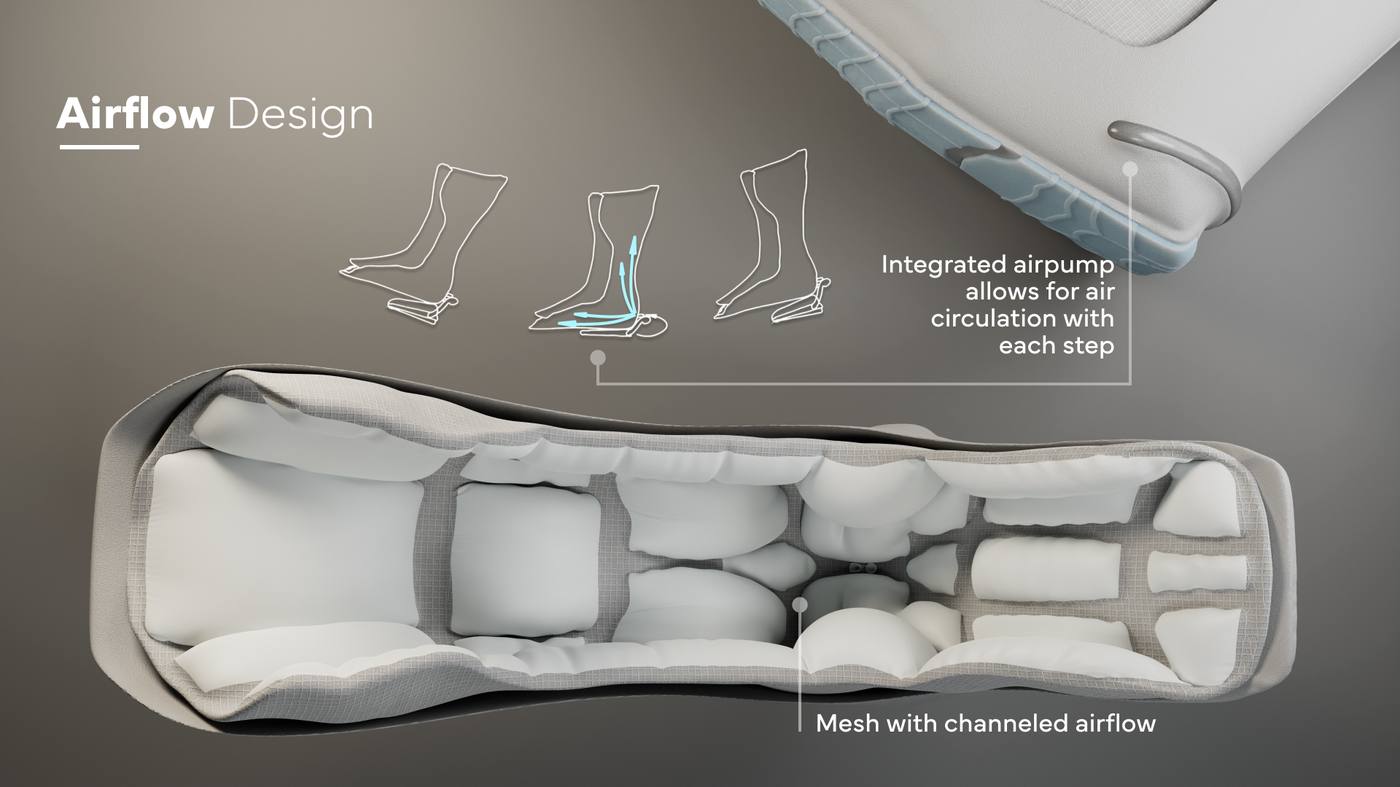
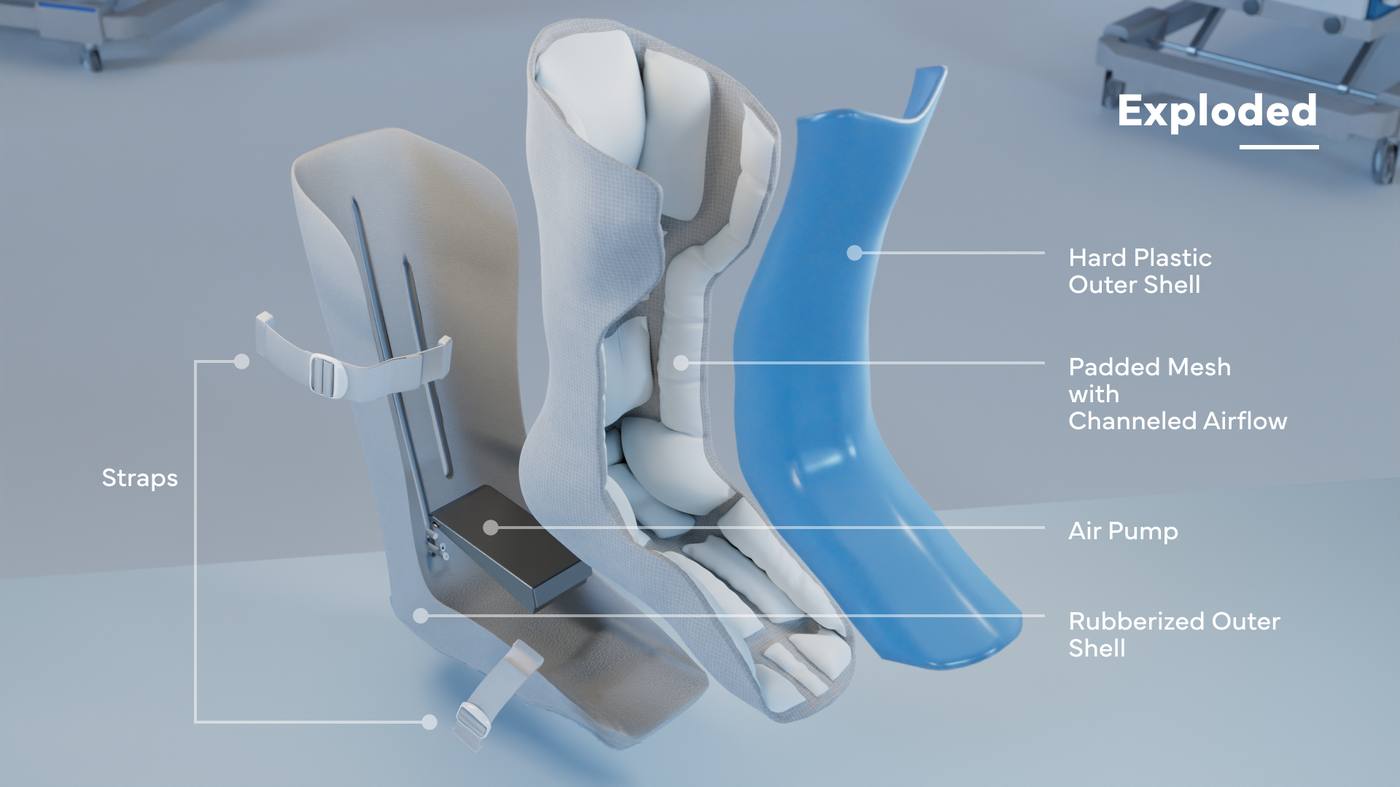
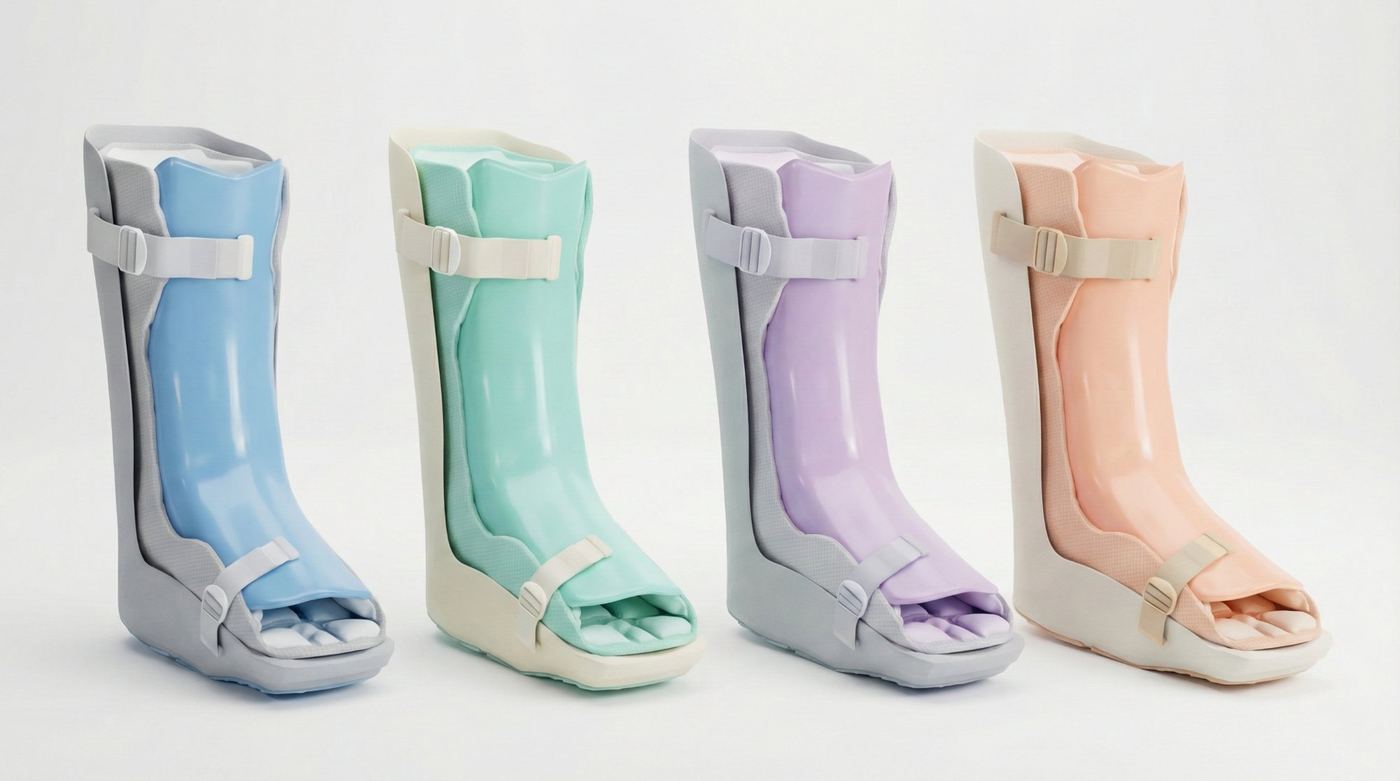
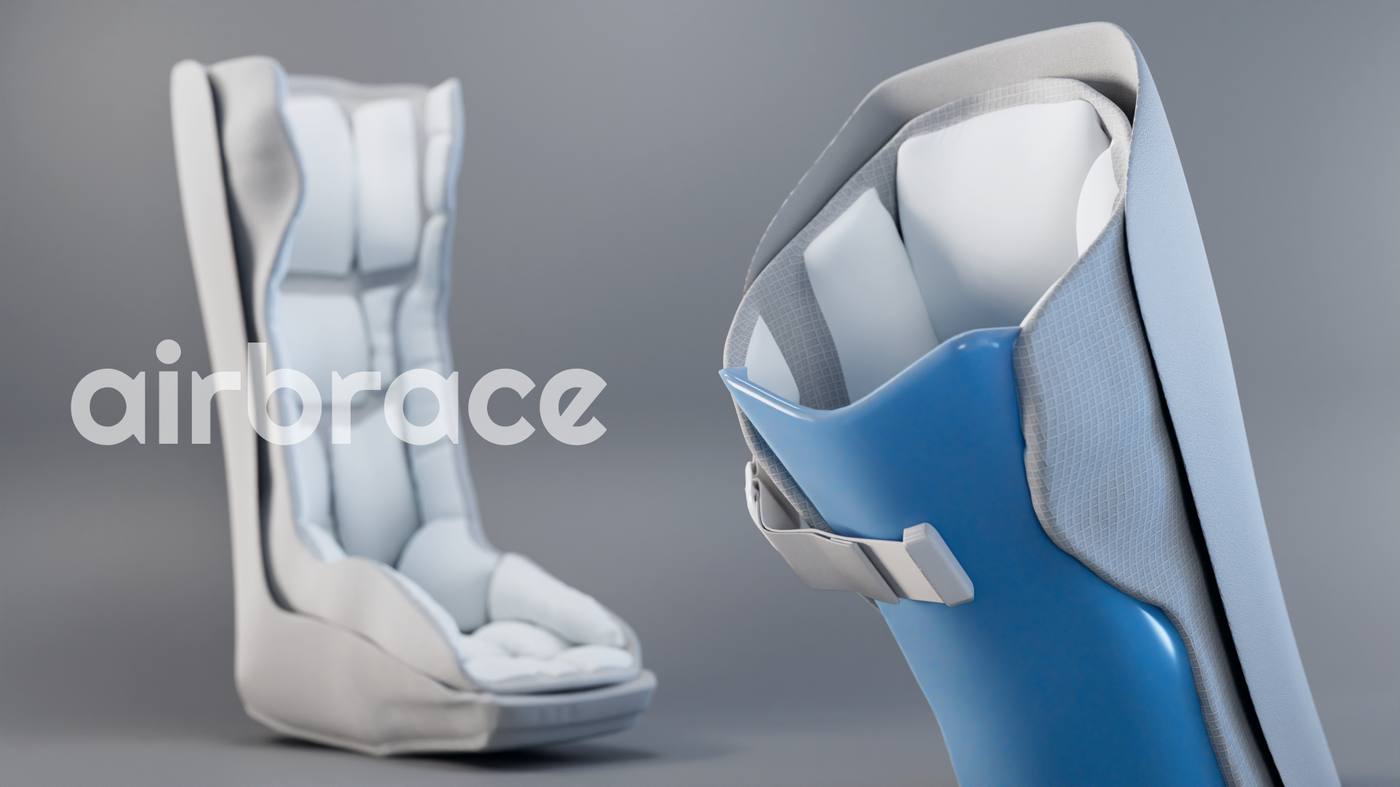
Standard leg braces trap heat and moisture against the skin — a design that, remarkably, hasn't meaningfully changed in over 50 years.
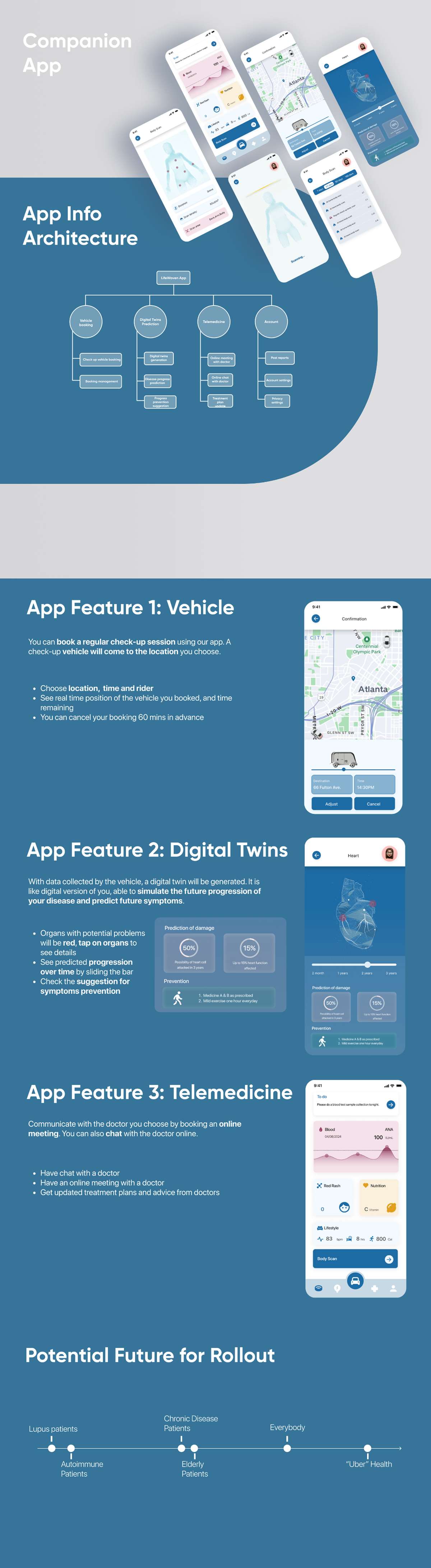
Lifewoven
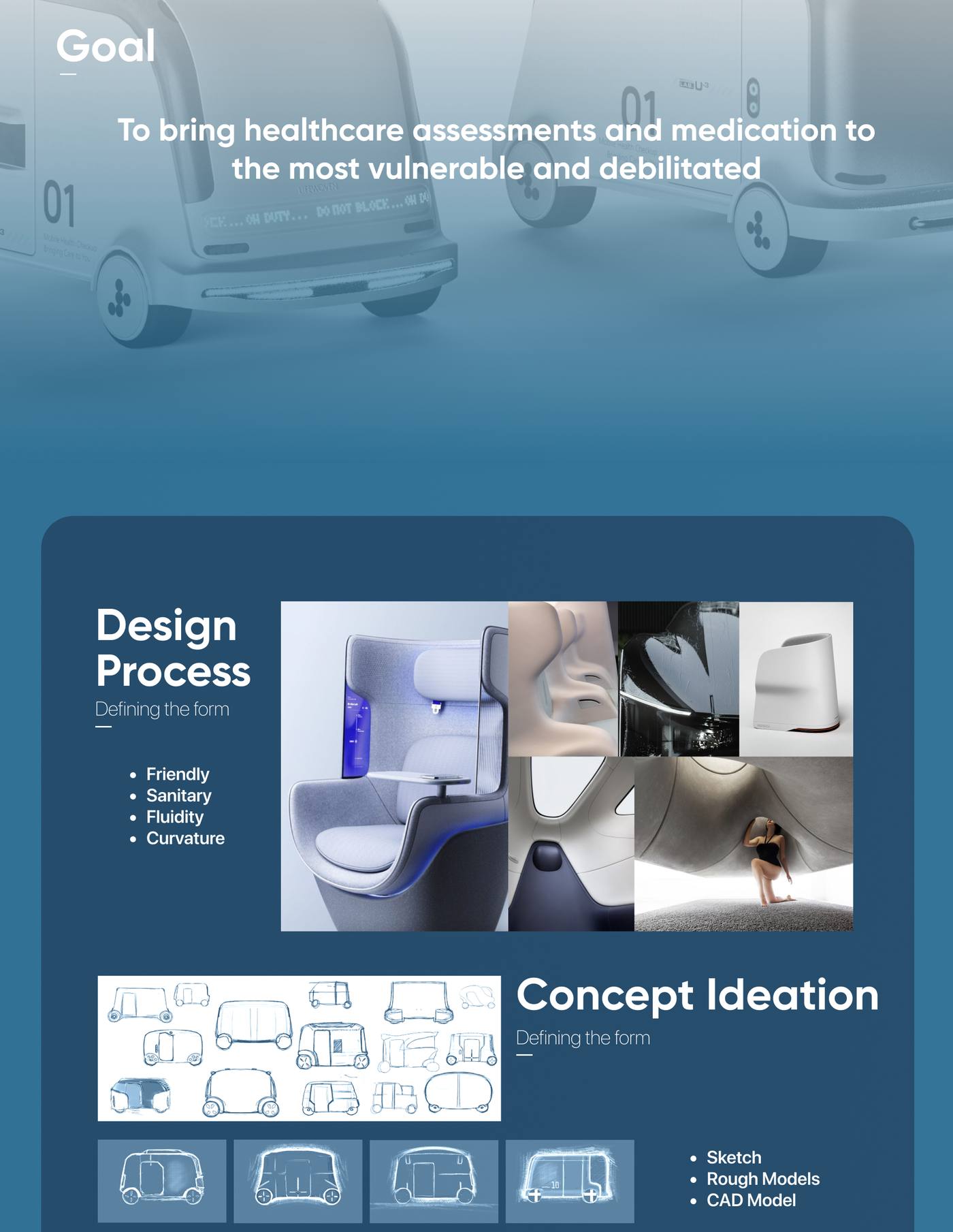
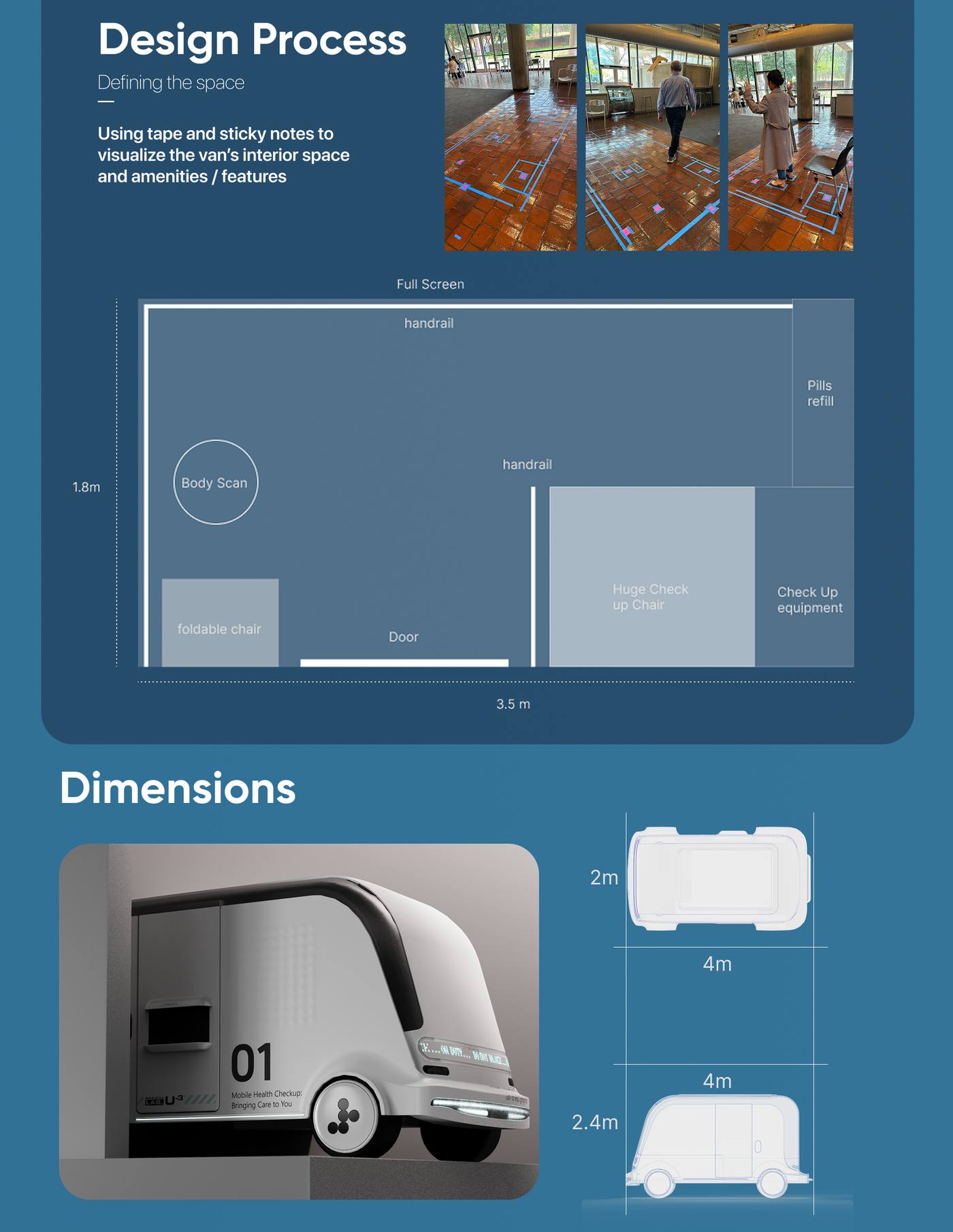
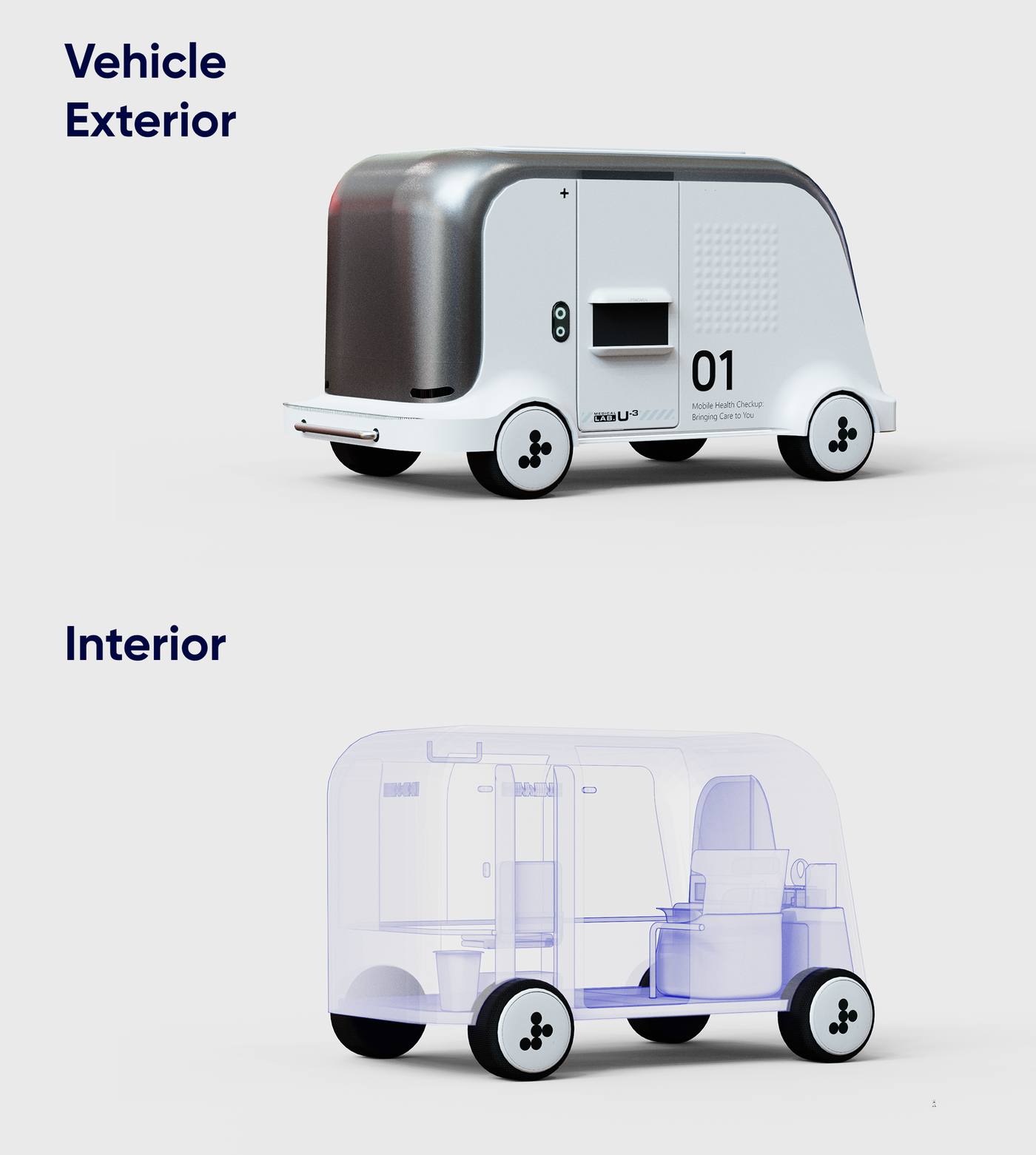
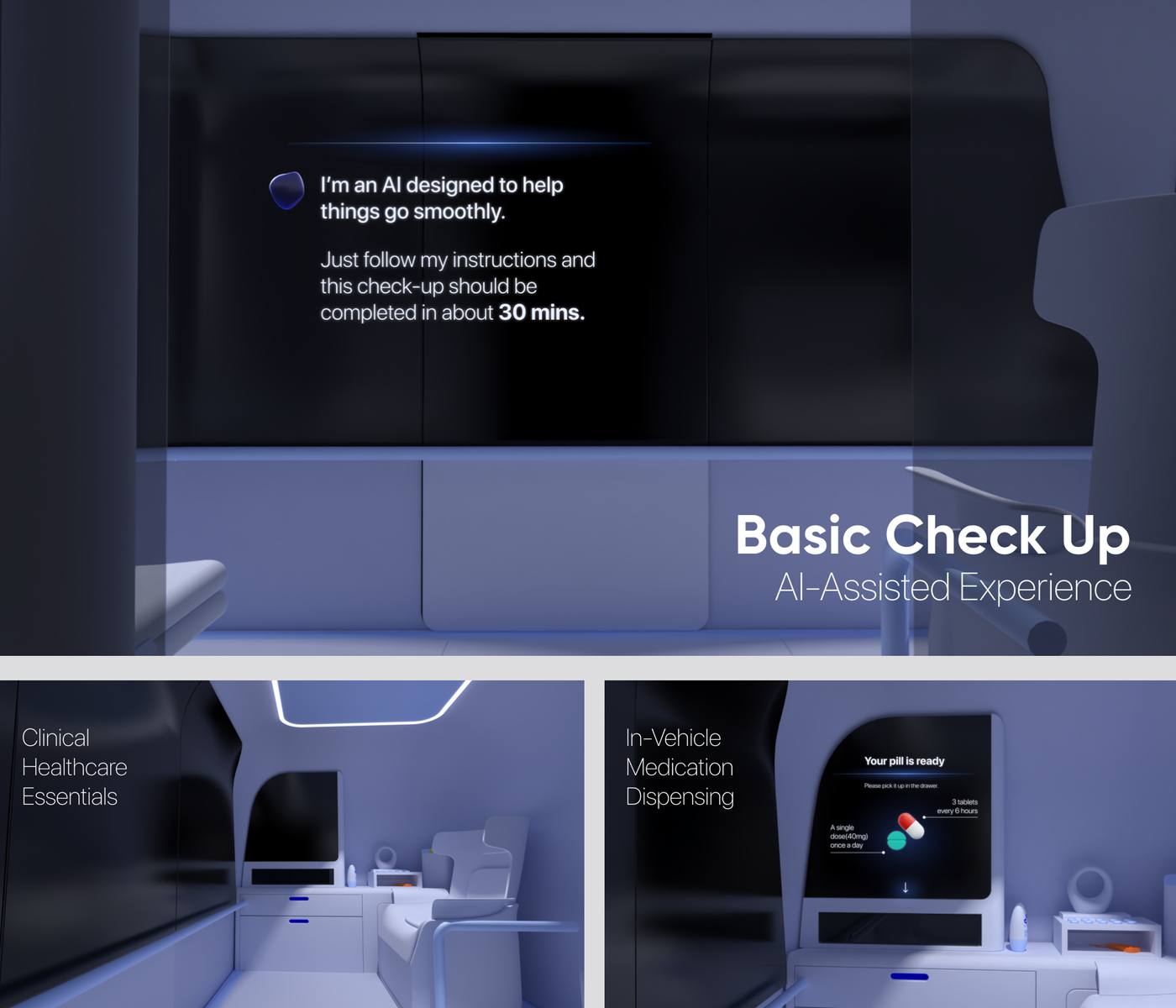
Occupate
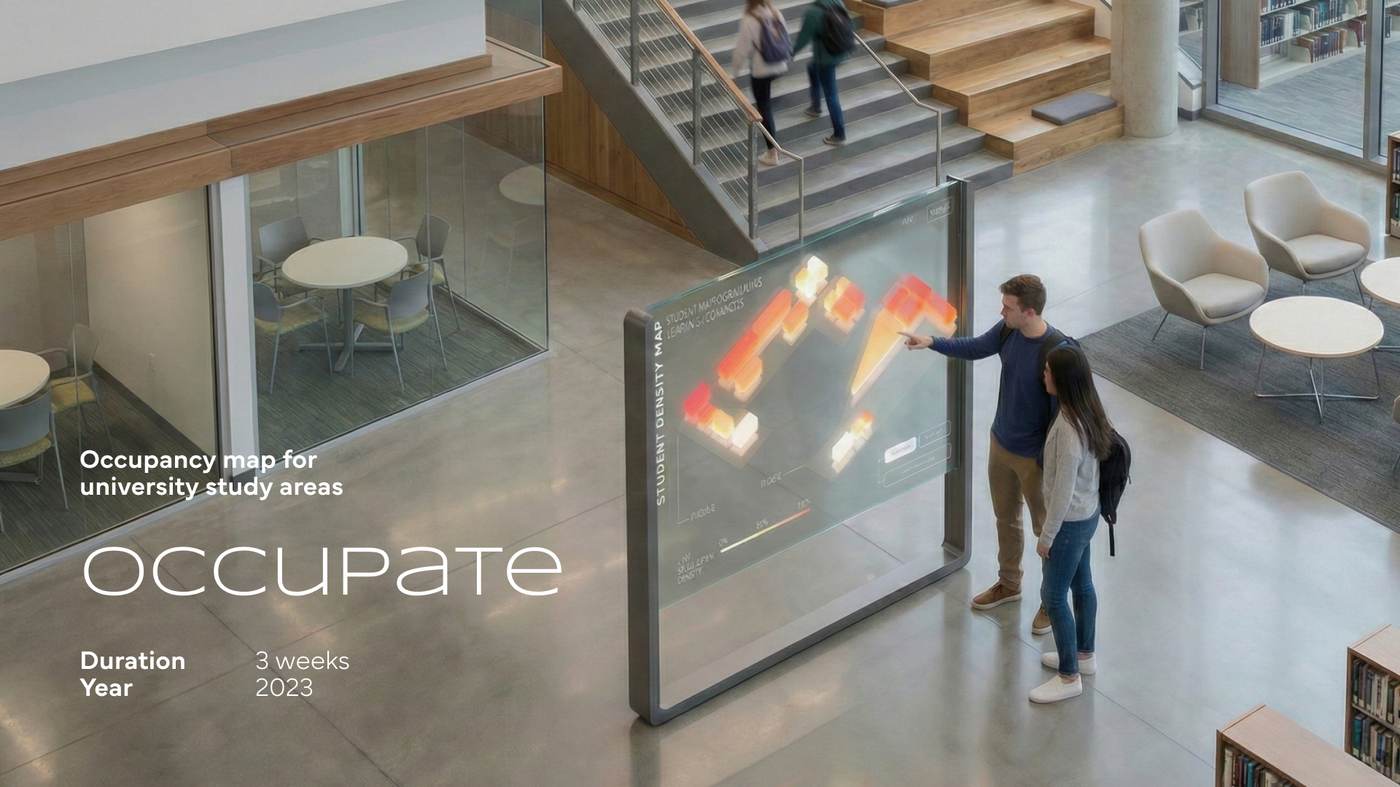
Overcrowding isn't just inconvenient.
It's a safety crisis.
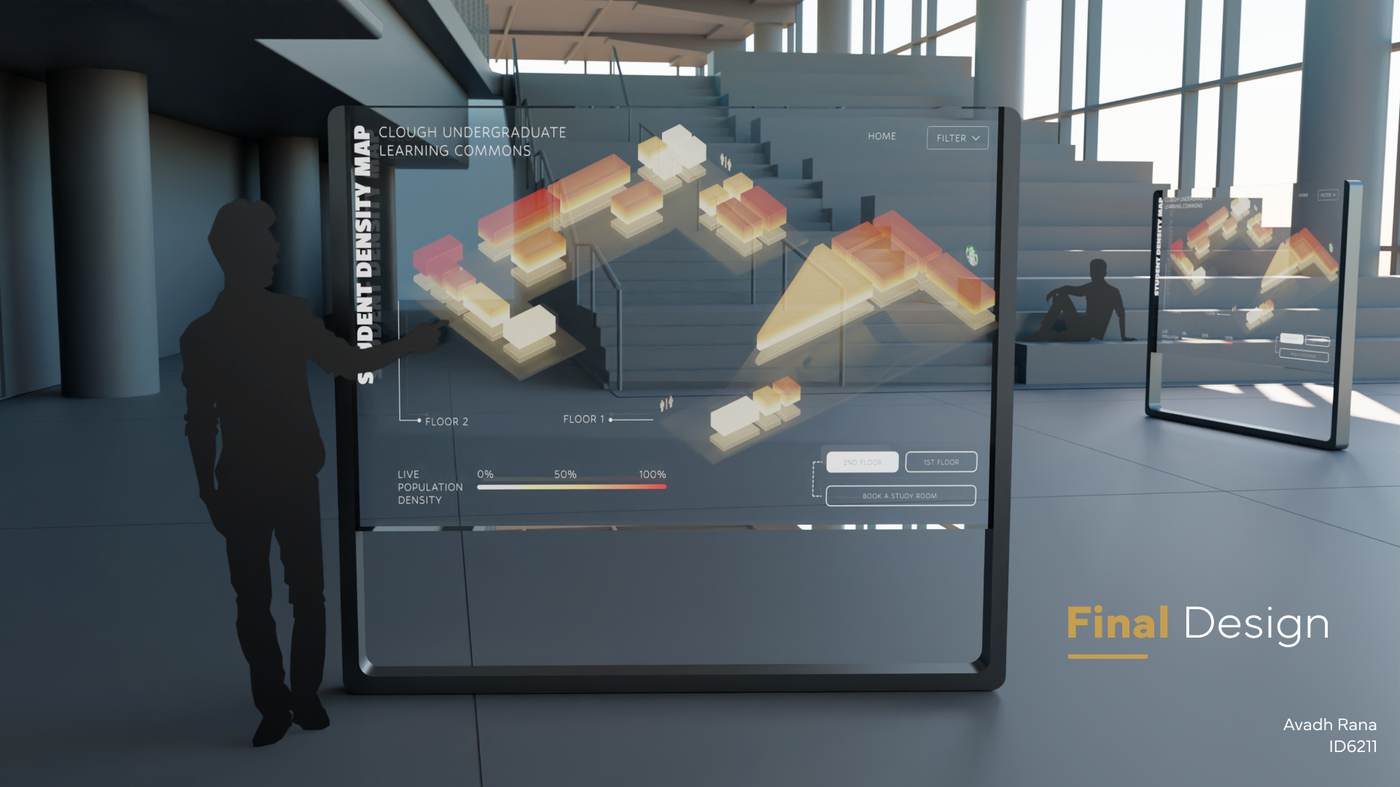
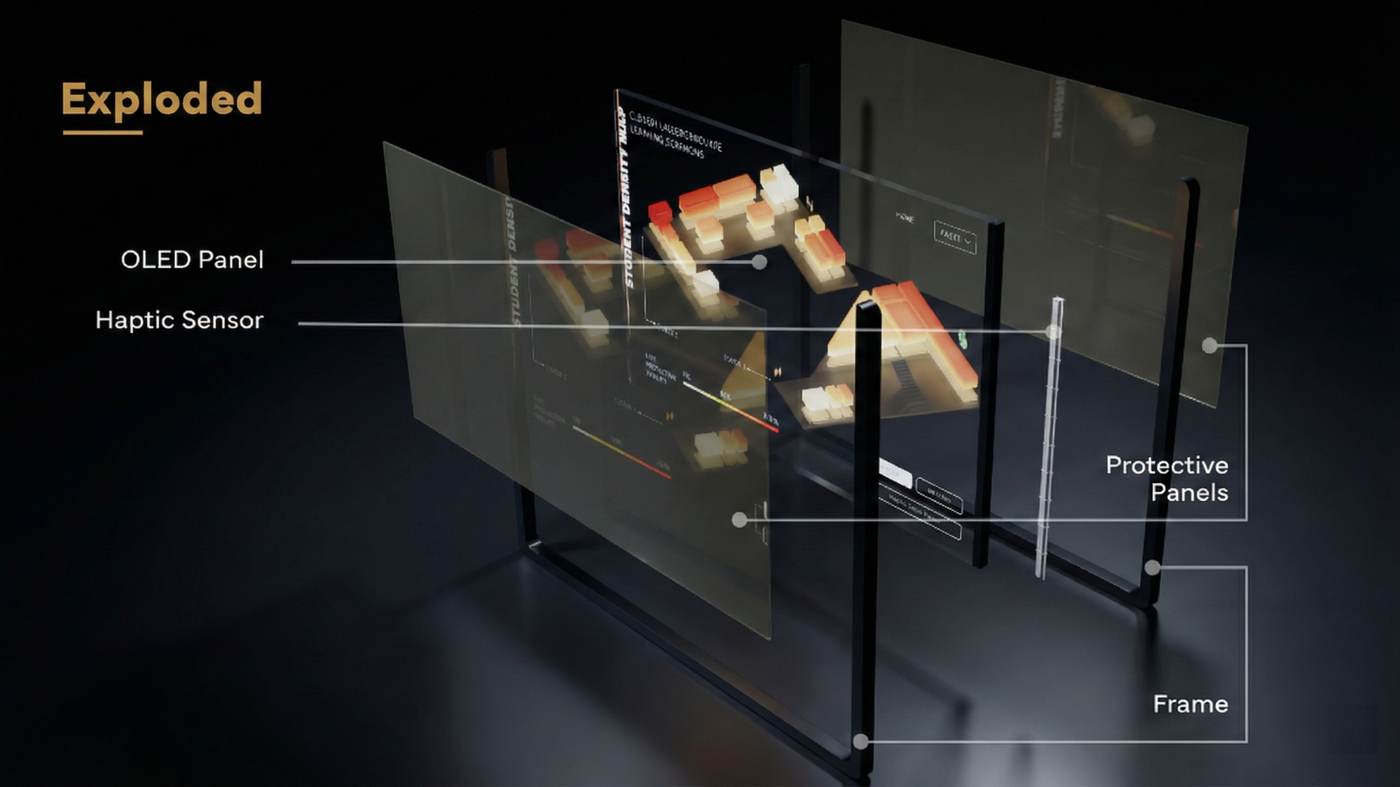
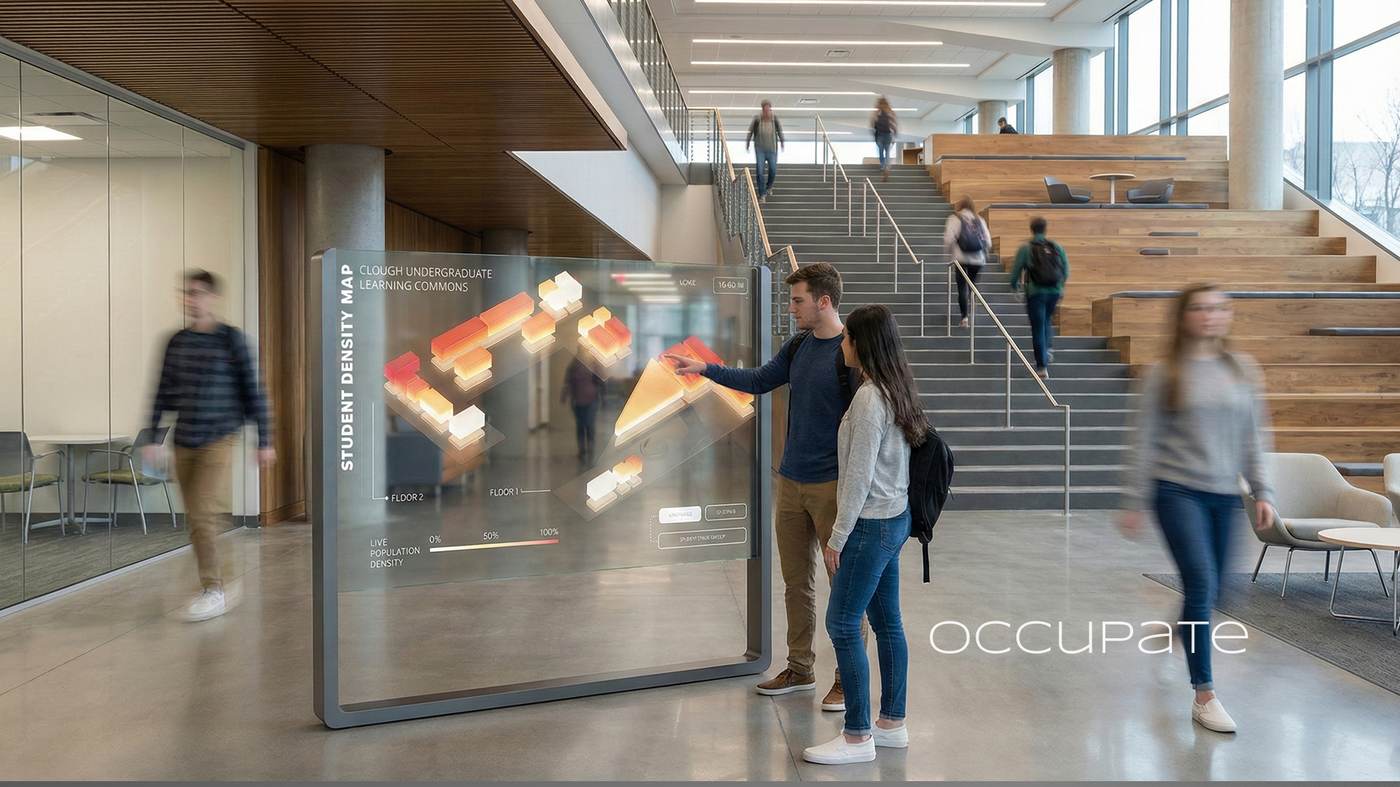
From campus buildings to warehouses and concert venues, exceeding safe occupancy limits puts lives at risk — and most spaces have no way to monitor or prevent it in real time. Students waste up to 30 minutes searching for open seats, but the deeper issue is that no one knows when a building has exceeded its safe capacity.
The cost of not knowing
who's inside.
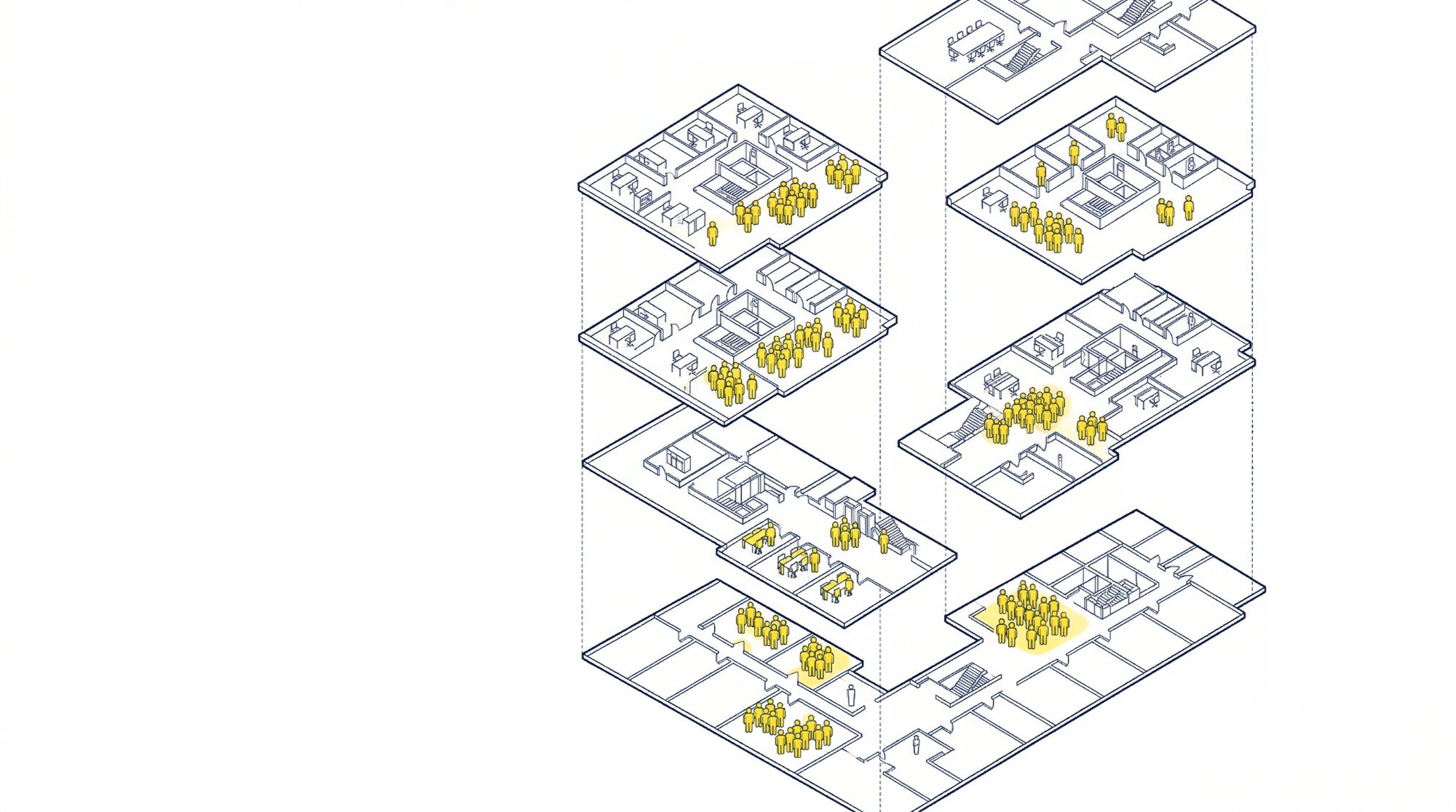
Overcrowding kills. Whether it's a packed concert venue, a university stairwell during a fire drill, or a warehouse floor during peak shift — when occupancy exceeds safe limits, evacuation slows, panic spreads, and people get hurt. Most buildings have a posted max occupancy, but almost none have a way to enforce it in real time.
Three core problems.
Three design opportunities.
Pain Point 01
No way to know when a space has exceeded safe capacity
Building managers rely on manual headcounts or visual estimates. By the time a floor is dangerously full, it’s already a fire code violation.
Opportunity
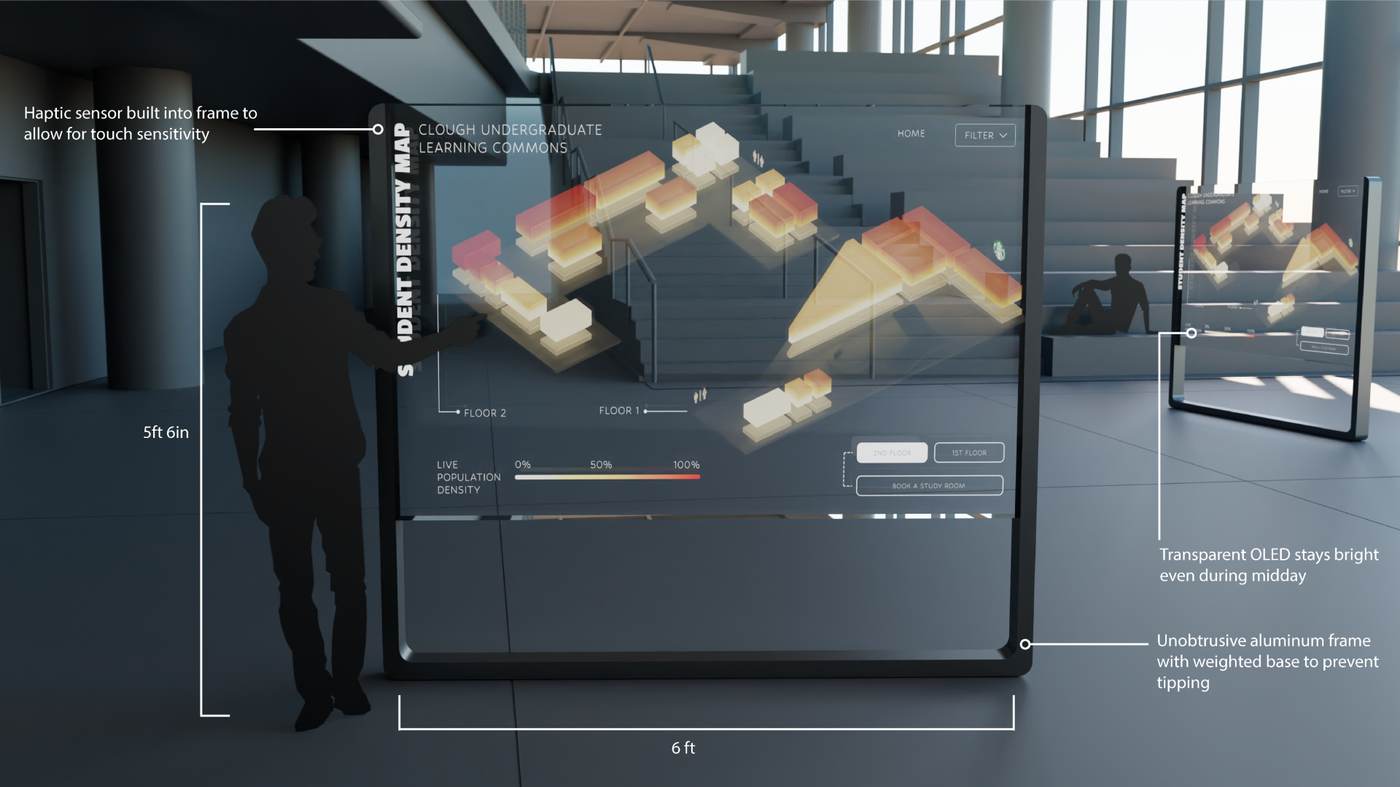
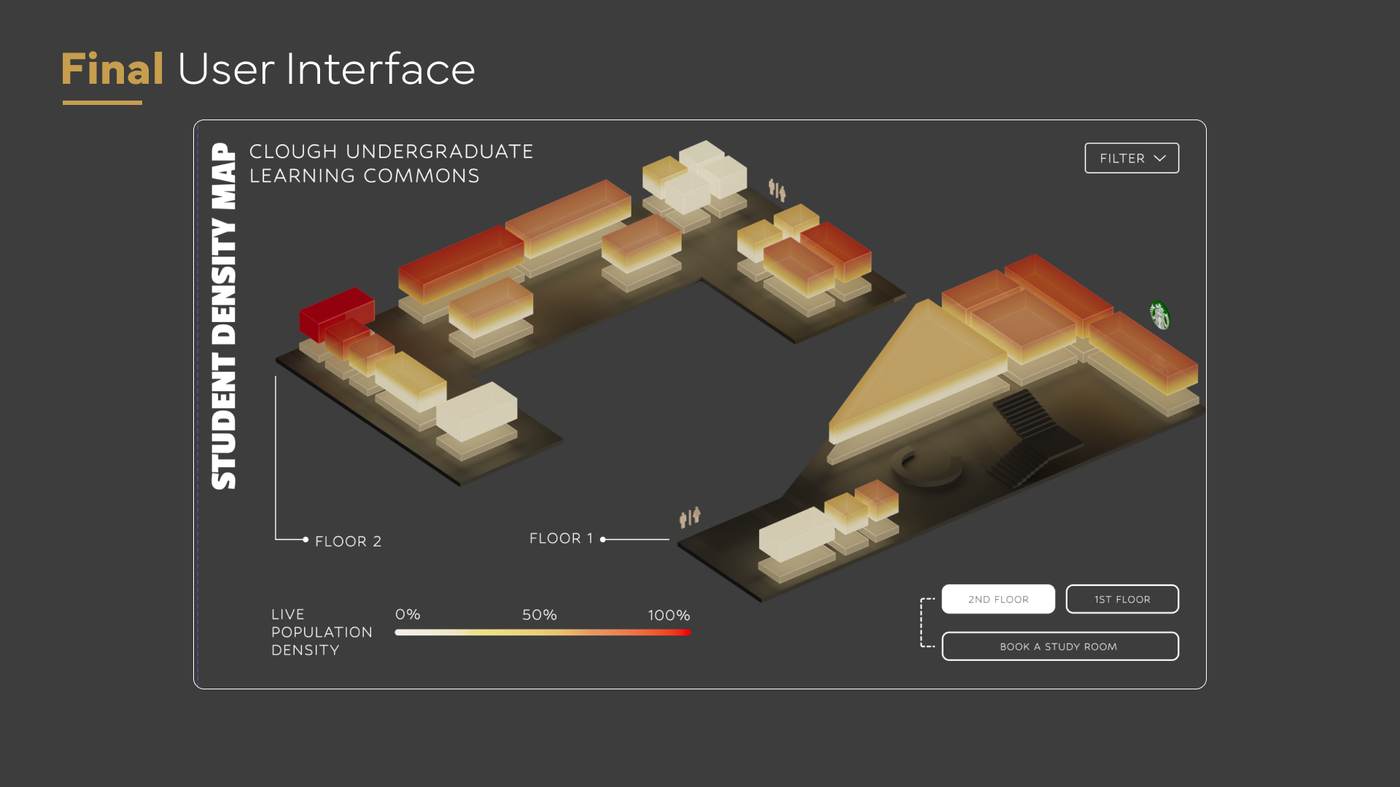
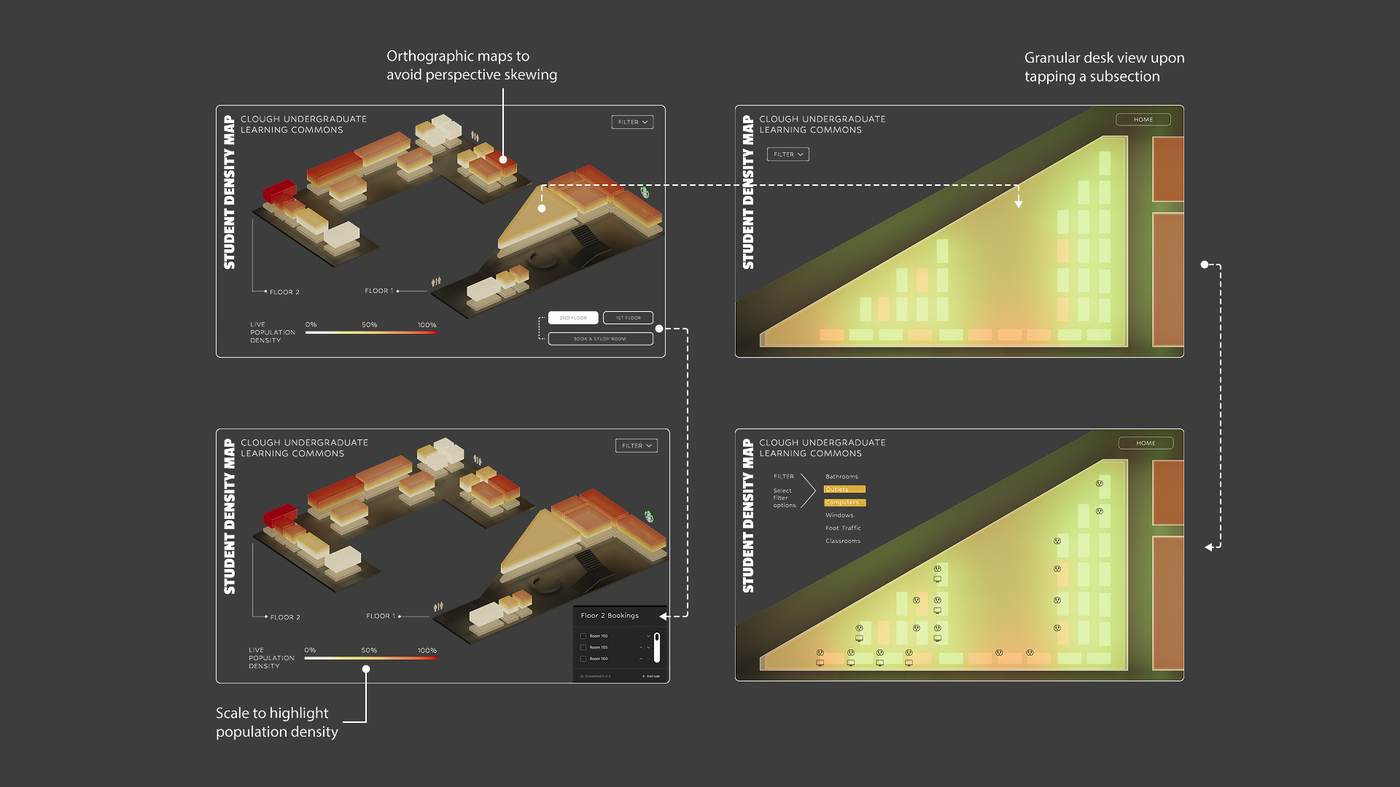
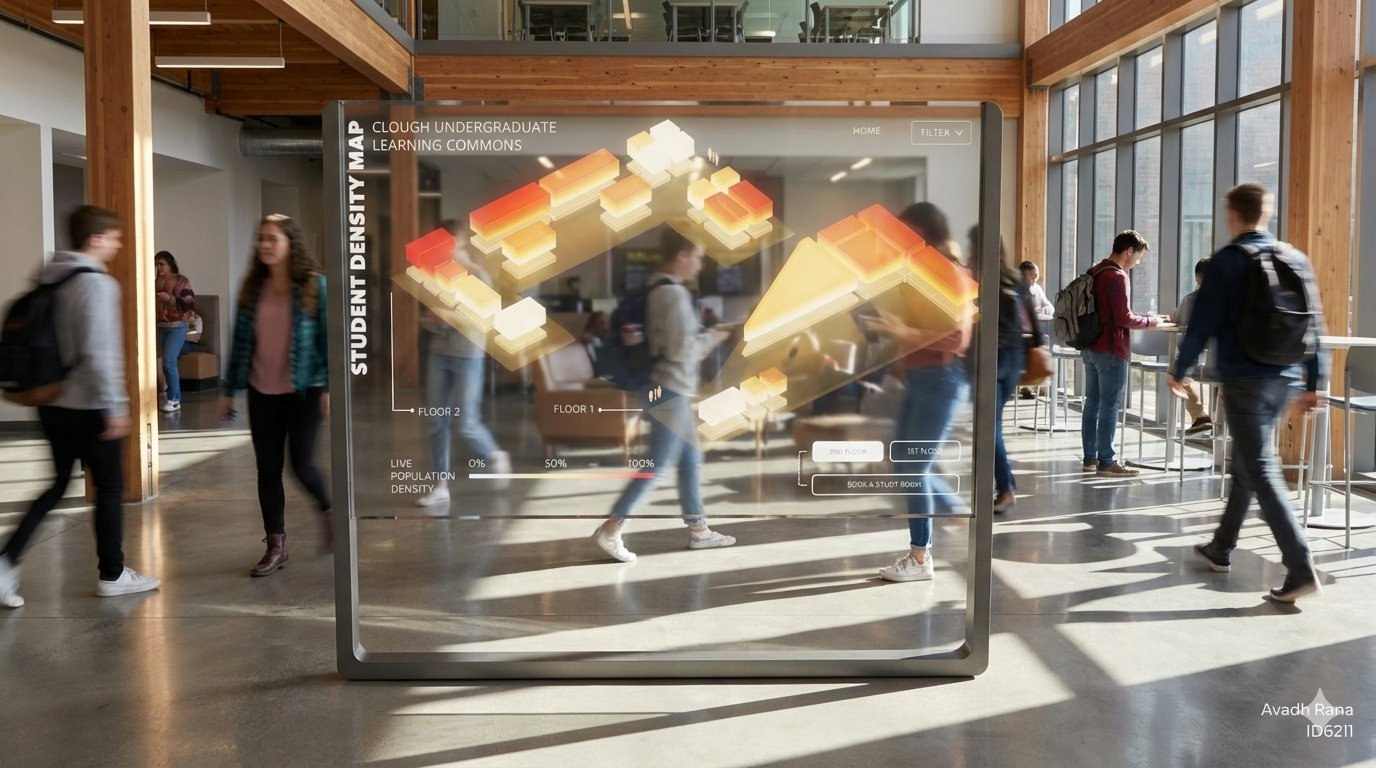
Real-time density mapping per floor
Show the number of people at a particular part of a floor or multiple floors — making dangerous crowding visible before it becomes critical.
HMW display high-density areas visually so managers can act before thresholds are crossed?
Pain Point 02
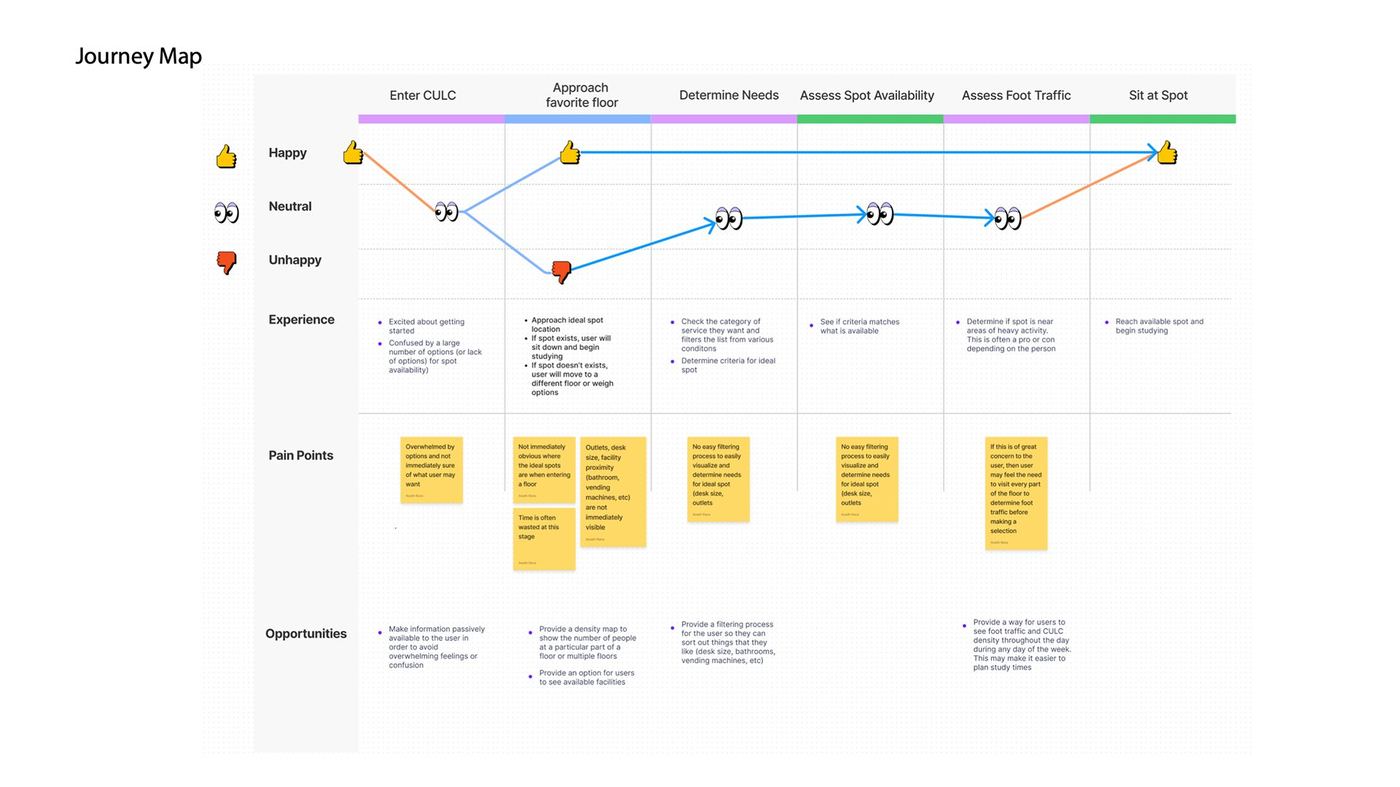
Foot traffic patterns are invisible and unpredictable
Density varies throughout the day and week. Without data, facility managers can’t anticipate bottlenecks or plan evacuation routes effectively.
Opportunity
Visualize foot traffic over time
Track and display foot traffic and occupancy density throughout the day and week — making it easier to plan study times, shifts, or event capacity.
HMW sort foot traffic visually through time instead of space?
Pain Point 03
No filtering to find the right kind of space
Users can’t easily determine needs for an ideal spot — desk size, outlet access, noise level, proximity to exits. No system supports this kind of granular wayfinding.
Opportunity
Smart filtering by amenity and environment
Let users filter available spots by criteria they care about — bathrooms, vending, desk size, noise, exits — so they can find the right space without wandering.
HMW allow users to generate criteria for their ideal spot and filter out what doesn’t matter?